
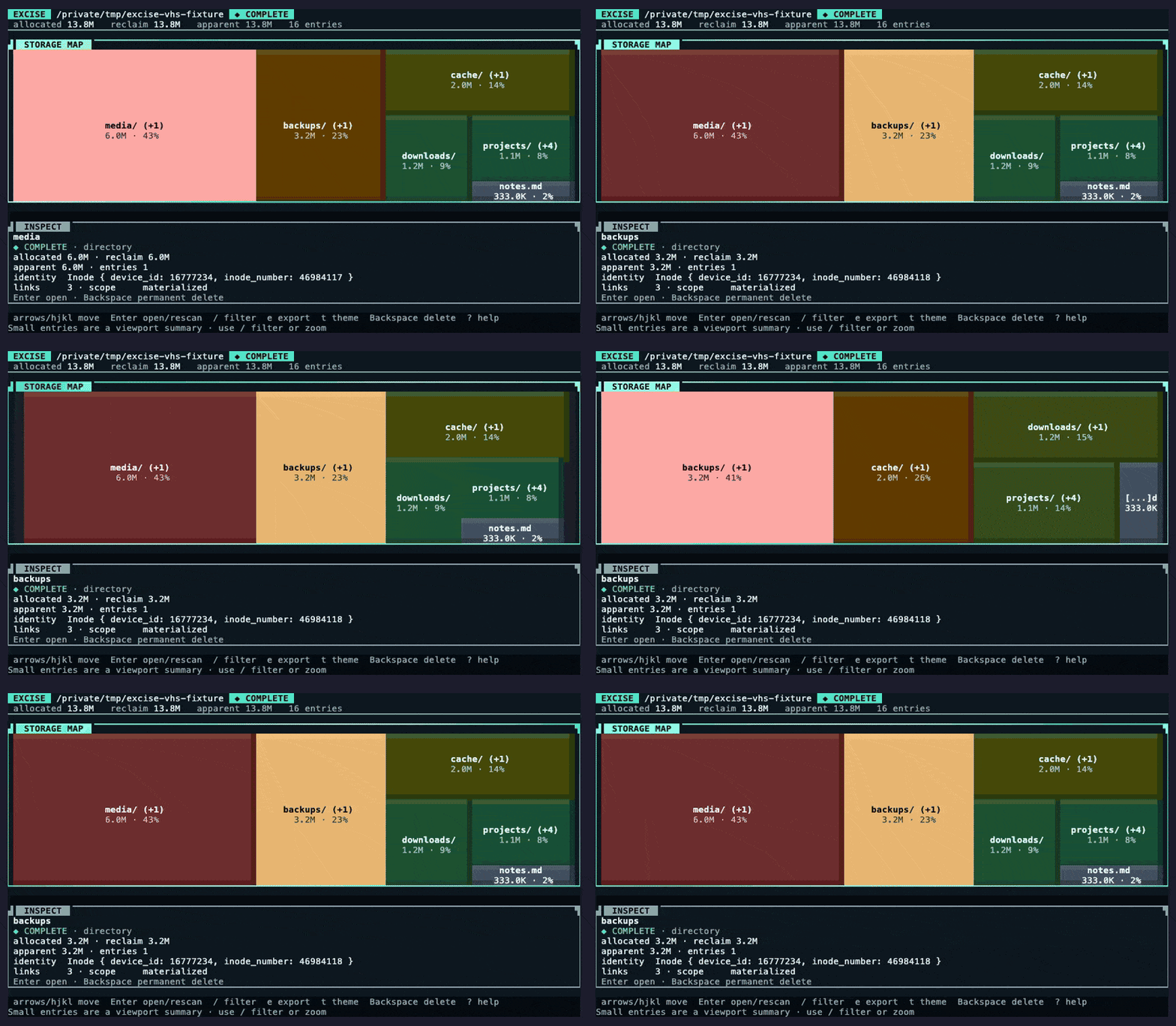
Excise is an interactive terminal storage navigator for understanding where disk space is being used and removing files or directories that are no longer wanted.
It is an independent fork and spiritual successor to Diskonaut, retaining the visual approach of exploring storage through a map while adding an extensive safety model. Excise distinguishes allocated disk space from apparent file size and treats uncertain values explicitly rather than presenting estimates as exact measurements. Permanent deletion is built into the workflow, but the program deliberately reviews and revalidates targets before making filesystem changes. There is no trash or undo mechanism, so destructive operations are intended to remain visible and deliberate.
This is free and open source software.
Key Features
- Interactive storage map for exploring files and directories.
- Colour-based size representation makes large entries easier to identify.
- Zoom and filtering controls for investigating crowded directories.
- Table output for human-readable reports.
- JSON output with stable report formats.
- Careful accounting for files with multiple hard links.
- Configurable limits for scanning, worker counts, memory and temporary storage.
- Can restrict scanning to the starting filesystem.
- Supports ordered exclusion patterns.
- Keyboard navigation including a Vim movement preset.
- Multiple themes, monochrome output, ASCII presentation and reduced-motion support.
- Checks deletion targets for changes before removing them.
- Does not follow symbolic links during deletion.
- Changed, missing, replaced or newly created entries are not silently deleted.
- Terminal state is restored after normal exit, errors, cancellation and panics.
Website: github.com/findyourexit/excise
Support:
Developer: Tom Larcher
License: MIT License
Excise is written in Rust. Learn Rust with our recommended free books and free tutorials.
Related Software
| du alternatives | Programming Language | License |
|---|---|---|
| dust | Rust | Apache License 2.0 |
| duf | Go | MIT License |
| Duc | C | GNU Lesser General Public License v3 |
| Ncdu | C | GNU GPL v2.0 License |
| gdu | Go | MIT License |
| cull | Go | MIT License |
| dua | Rust | MIT License |
| erdtree | Rust | MIT License |
| pdu | Rust | Apache License 2.0 |
| vizex | Python | MIT License |
| godu | Go | MIT License |
| dutree | Rust | GNU General Public License v3 |
| space | Rust | MIT License |
| darya | Rust | GNU General Public License v3.0 |
| diskus | Rust | MIT License or Apache License 2.0 |
| NoxDir | Go | MIT License |
| mcdu | Rust | MIT License |
| dirstat-rs | Rust | MIT License |
| diskonaut | Rust | MIT License |
| bonsai | C++ | GNU General Public License v3.0 |
| diskard | Rust | MIT License or Apache License 2.0 |
| cdu | Perl | GNU General Public License v2.0 |
| tdu | Go | GNU General Public License v2 |
| duviz | Python | MIT License |
| dut | C | GNU General Public License v3.0 |
| whalespotter | Rust | MIT License |
| sn | Rust | BSD 3-Clause “New” or “Revised” License |
Read our verdict in the software roundup.
 LinuxLinks helps you discover the best free and open source software for Linux. Explore our extensive collection of recommended applications, including alternatives to popular proprietary software. LinuxLinks helps you discover the best free and open source software for Linux. Explore our extensive collection of recommended applications, including alternatives to popular proprietary software.We also publish software reviews, Linux tutorials, hardware reviews, free programming books and articles covering the wider open source community. Browse our Linux resources to discover more. Know a useful free and open source Linux application we haven't covered? Suggest a program for inclusion. Has your software been featured on LinuxLinks? Display one of our Featured on LinuxLinks badges on your website or GitHub README. |
Please read our Comment Policy before commenting.