
Last Updated on August 6, 2026
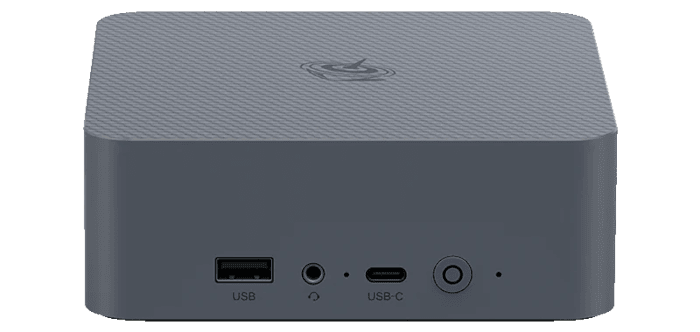
This is a series looking at the Beelink EQi Core 3 304 mini PC running Linux. In this series, I’ll put the Beelink mini PC through its paces from a Linux perspective, comparing it with other systems to see how it performs in real-world Linux use.
The Beelink EQi Core 3 304 is a recent addition to Beelink’s EQ range of compact PCs. It’s built around Intel’s Wildcat Lake Core 3 304 processor, a 5-core, 5-thread chip comprising one performance core and four low-power efficiency cores. The processor integrates Xe3-LPG graphics and currently has a CPU Mark of 11,720. The review unit comes with 16GB of LPDDR5 6400MT/s memory and 512GB of UFS 3.1 storage, giving the system a capable hardware base for everyday desktop use, office work, media playback and lighter Linux workloads.
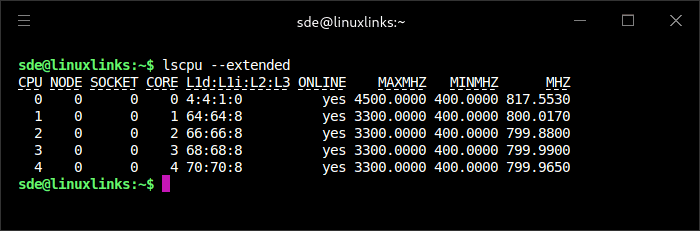
The Beelink EQi 304 uses Intel’s hybrid architecture, combining 1 Performance-core with 4 Low Power Efficient-cores. The P-core delivers the strongest single-threaded performance and is best suited to demanding foreground tasks. The LP E-cores are designed for lighter workloads and low-power operation, while also contributing additional throughput when software can use multiple cores. Unlike processors with conventional E-cores or Hyper-Threading, the Core 3 304 exposes 5 cores and 5 threads, so each core maps to a single logical CPU.
I want to see the performance difference between the EQI 304’s P-core and LP Efficient-cores, and then compare those results with the Intel Processor N100, which has 4 Efficient-cores and no P-cores or LP Efficient-cores.
$ taskset -c 0 phoronix-test-suite benchmark crafty
$ taskset -c 1 phoronix-test-suite benchmark crafty
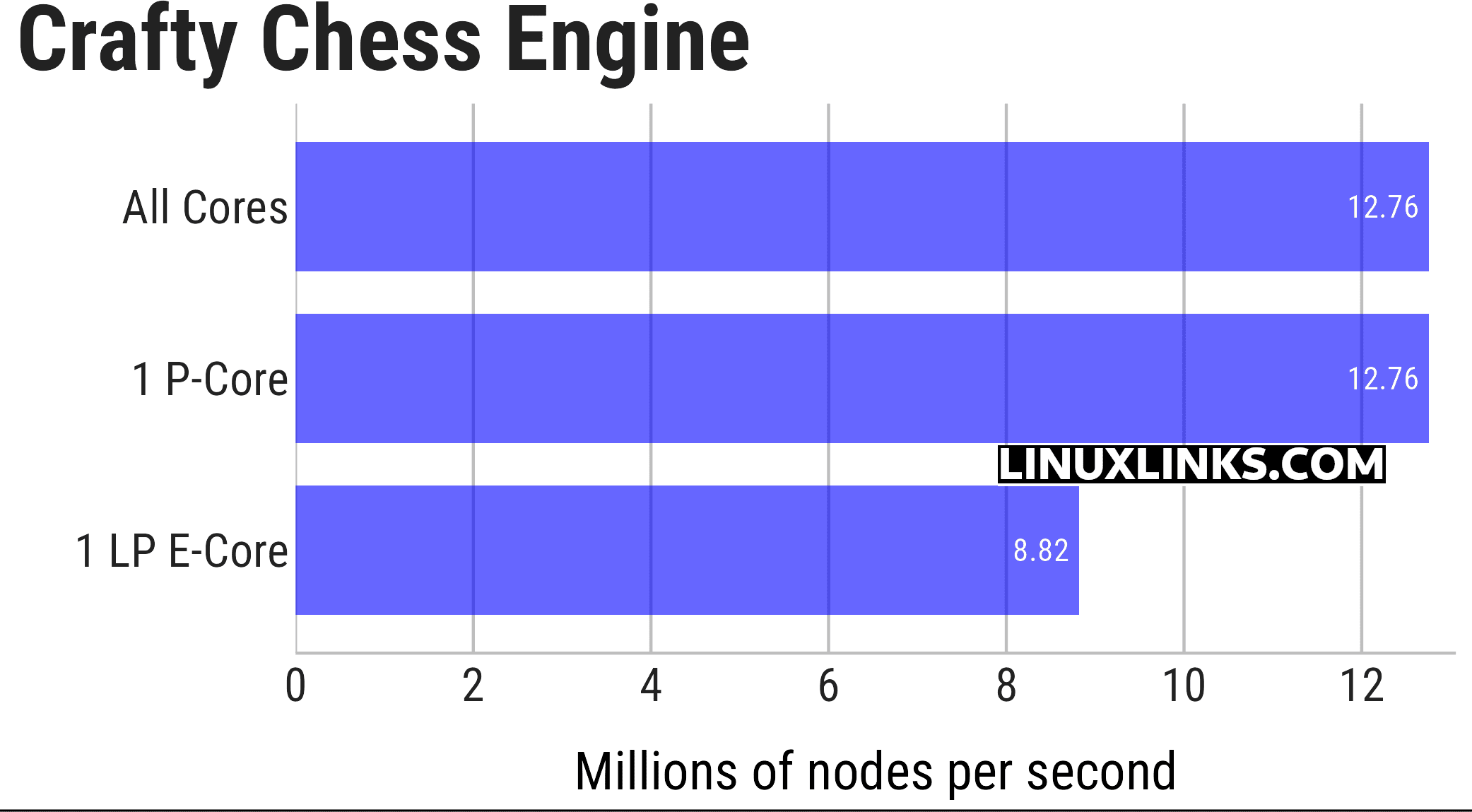
Crafty is a single-threaded benchmark, so enabling all cores provides no additional performance: both the All Cores and 1 P-Core tests achieve 12.76 million nodes per second. Restricting Crafty to a single LP Efficient-core reduces performance to 8.82 million nodes per second. The P-core is around 45% faster than the LP E-core and 78% faster than the Intel Processor N100, which records 7.18 million nodes per second. Even the LP E-core outperforms the N100 by approximately 23%.
$ taskset -c 0 phoronix-test-suite benchmark coremark
$ taskset -c 1 phoronix-test-suite benchmark coremark
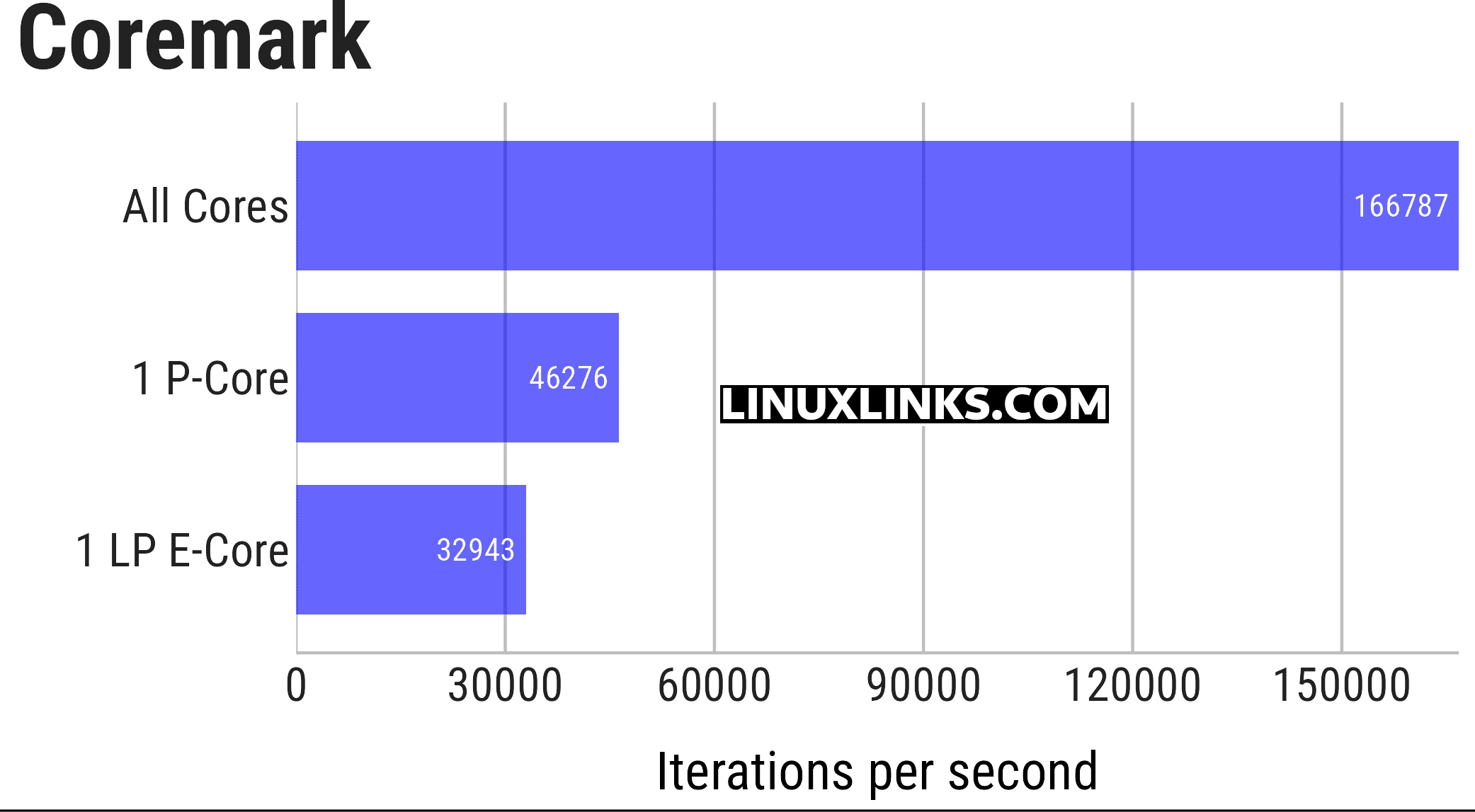
CoreMark benefits substantially from the Core 3 304’s five cores. The all-core result reaches 166,787 iterations per second, compared with 46,276 for the P-core and 32,943 for one LP Efficient-core. The P-core is around 40% faster than an LP E-core, confirming its stronger per-core performance. The all-core score is 3.6 times the single P-core result and about 5.1 times the single LP E-core result. It falls roughly 6% short of the simple total obtained by adding one P-core and four LP E-core scores, indicating good, though not perfectly linear, multi-core scaling.
The Core 3 304 also comfortably outperforms the Intel Processor N100. Its all-core score of 166,787 iterations per second is around 73% higher than the N100’s 96,304. The Core 3 304’s P-core is approximately 64% faster than a single N100 E-core, while even one LP Efficient-core is about 17% faster than the N100’s single-core result.
$ taskset -c 0 phoronix-test-suite benchmark smallpt
$ taskset -c 1 phoronix-test-suite benchmark smallpt
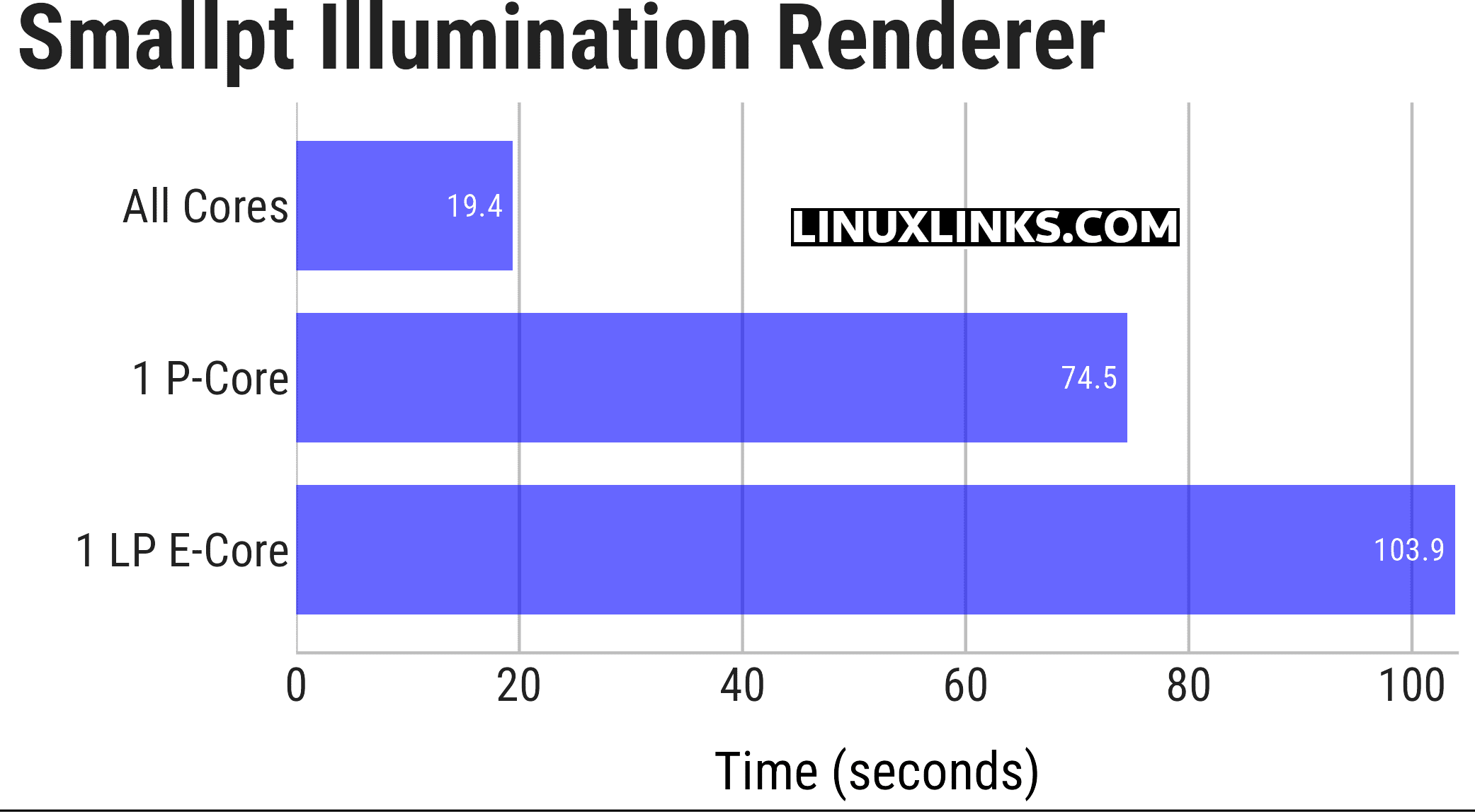
Smallpt is a multi-threaded rendering benchmark, and lower times are better. A single P-core completes the test in 74.5 seconds, compared with 103.9 seconds for one LP Efficient-core. The P-core therefore takes around 28% less time, equivalent to roughly 39% greater rendering throughput. Using all five cores reduces the completion time to just 19.4 seconds, making the system about 3.8 times faster than the P-core alone and 5.4 times faster than a single LP E-core. The all-core result is very close to the theoretical performance obtained by combining the throughput of one P-core and four LP E-cores, indicating excellent multi-core scaling.
Compared with the Intel Processor N100, the Core 3 304 completes the all-core test in 19.4 seconds rather than 43.1 seconds, taking 55% less time and delivering about 2.2 times the rendering throughput. Its P-core completes the benchmark in 74.5 seconds, almost twice as fast as one N100 E-core at 146.5 seconds. Even a single LP Efficient-core finishes in 103.9 seconds, taking 29% less time than the N100’s single-core result.
Summary
The P-core is consistently faster than an LP Efficient-core, leading by around 45% in Crafty, 40% in CoreMark and 39% in Smallpt rendering throughput. The LP E-cores nevertheless provide useful performance individually and make a substantial contribution when all five cores are used. Multi-core scaling is good in CoreMark and excellent in Smallpt, showing that the four LP E-cores significantly strengthen parallel performance.
Compared with the N100, the Core 3 304 gains a huge single-core boost from its P-core; even an LP Efficient-core is faster, and the chip offers five cores rather than four.
Complete list of articles in this series:
| Beelink EQi 304 Mini PC | |
|---|---|
| Introduction | Introduction to the series and interrogation of the machine |
| Benchmarks | Benchmarking the Beelink EQi 304 Mini PC |
| Power | Testing and comparing the power consumption |
| BIOS | In the world of computing, BIOS, which stands for Basic Input/Output System, plays a crucial role |
| Cores | P-core and LP Efficient-cores examined |
| Noise | How quiet is this mini PC? |
| NPU and Llama | Testing the NPU with Llama models |
Please read our Comment Policy before commenting.