

Moodle is a learning management system (LMS) for creating, delivering and managing online courses. It provides educators with a central environment for organising teaching materials, communicating with learners and assessing their progress.
The platform is used by schools, universities, training organisations and businesses. It supports classroom teaching, fully online courses and blended learning, with tools that can be adapted to different educational approaches.
Moodle is designed around a modular architecture. Administrators can customise the platform to suit their institution, while teachers can build courses containing a mixture of resources, assessments and collaborative activities.
This is free and open source software.
Key Features
- Create instructor-led, self-paced and blended learning courses with configurable structures and activities.
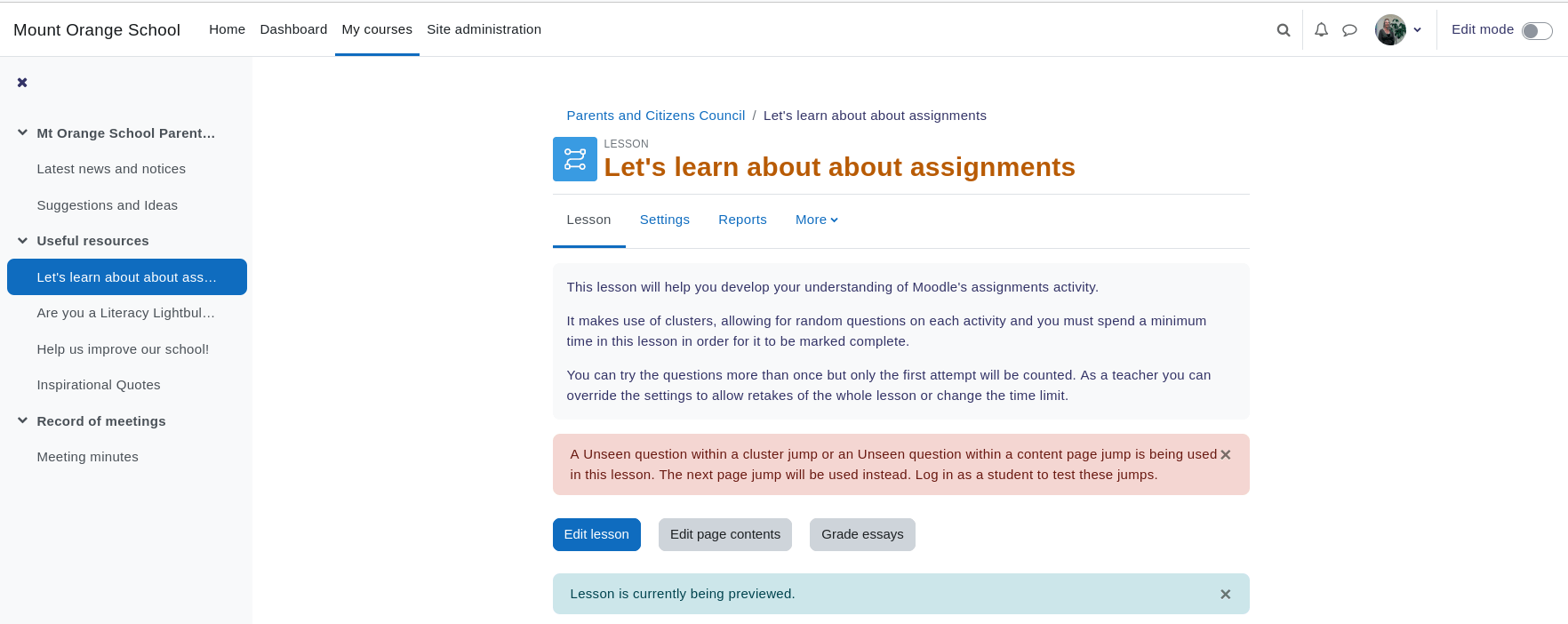
- Course activities include assignments, quizzes, lessons, forums, glossaries, databases, wikis and workshops.
- H5P integration for interactive learning content including presentations, exercises and multimedia activities.
- Comprehensive gradebook with configurable grading methods, categories, scales and assessment criteria.
- Assignment workflows support online submissions, file uploads, marking guides, rubrics and individual feedback.
- Question banks with reusable questions and configurable quiz attempts, timing, feedback and grading.
- Activity and course completion tracking, including conditional access to learning materials.
- Competency frameworks and learning plans for monitoring progress towards defined educational outcomes.
- Issue digital badges recognising participation, course completion and other achievements.
- Organise learners into groups and groupings for differentiated teaching and collaborative activities.
- Detailed reports covering participation, activity completion, grades and learner engagement.
- Role-based permissions and configurable authentication and enrolment methods.
- Responsive interface with configurable dashboards, calendars, notifications and messaging.
- Import and manage SCORM learning packages and connect external learning tools through LTI.
- Extensive plugin architecture covering additional activities, integrations, reports and themes.
- Multilingual interface with customisable language preferences and accessibility features.
- Course backup, restore, import and reuse facilities for sharing teaching materials.
Website: github.com/moodle/moodle
Support:
Developer: Martin Dougiamas, Moodle HQ and contributors
License: GNU General Public License v3.0
Moodle is written in PHP. Learn PHP with our recommended free books and free tutorials.
Related Software
| Classroom Tools | |
|---|---|
| Moodle | Produce modular internet-based courses |
| Veyon | Computer monitoring and classroom management |
| TCExam | FLOSS Computer-Based Assessment system |
| Epoptes | Computer lab management and monitoring tool |
| Claroline | Collaborative e-Learning and eWorking platform |
| Mando | Interactive whiteboard using a camera and a projector |
| iTest | Computerised examination |
| ATutor | Designed with accessibility and adaptability in mind |
Read our verdict in the software roundup.
 LinuxLinks helps you discover the best free and open source software for Linux. Explore our extensive collection of recommended applications, including alternatives to popular proprietary software. LinuxLinks helps you discover the best free and open source software for Linux. Explore our extensive collection of recommended applications, including alternatives to popular proprietary software.We also publish software reviews, Linux tutorials, hardware reviews, free programming books and articles covering the wider open source community. Browse our Linux resources to discover more. Know a useful free and open source Linux application we haven't covered? Suggest a program for inclusion. Has your software been featured on LinuxLinks? Display one of our Featured on LinuxLinks badges on your website or GitHub README. |
Please read our Comment Policy before commenting.