
This roundup focuses on memory tools that help with forensics. Only free and open source software is eligible for inclusion here.
Read more
This roundup focuses on memory tools that help with forensics. Only free and open source software is eligible for inclusion here.
Read more
In this roundup we focus on useful tools that help you work out the amount of memory used by programs.
Read more
Volshell is a utility to access the volatility framework interactively with a specific memory image.
Read more
pypykatz is a cross-platform implementation of Mimikatz written in Python.
Read more
MemProcFS is an easy and convenient way of viewing physical memory as files in a virtual file system.
Read more
EVTXtract recovers and reconstructs fragments of EVTX log files from raw binary data, including unallocated space and memory images.
Read more
AVML is an X86_64 userland volatile memory acquisition tool written in Rust, intended to be deployed as a static binary.
Read more
process-map displays a Linux process’s virtual address space, symbols and thread instruction pointers in a navigable graphical memory map.
Read more
mstat tracks memory use across a Linux process tree using cgroups, with configurable sampling, TSV output and support for cgroups v1 and v2.
Read more
process-mem reports memory used by processes matched by name or regular expression, with user filtering, shared-memory details and sorting.
Read more
alram monitors available Linux RAM, displays low-memory notifications and can terminate selected processes using a configurable threshold.
Read more
psrecord monitors process CPU and memory usage, recording time-series data, CSV logs and plots, with optional child-process tracking.
Read more
stress-ng stress tests CPU, memory, filesystems, devices, schedulers and kernel interfaces with a broad set of configurable stressors.
Read more
GtkStressTesting is a GTK utility for stressing and monitoring CPU and memory while showing detailed hardware information and sensor data.
Read more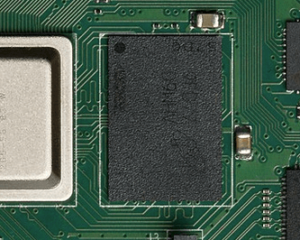
The Raspberry Pi 4 has 3 models with 1GB, 2GB, and 4GB of RAM. We explore memory usage of Chromium, Mathematica, and other applications.
Read more
This is the first in a series of articles highlighting essential system tools. These are small utilities, useful for system administrators as well as regular users of Linux based systems. The series will examine both graphical and text based open source utilities. The first tool under the spotlight is ps_mem, a small utility that reliably reports how much memory is consumed by an application.
Read more