
This series recommends what to choose when buying a refurbished Mini PC to run Linux as a desktop computer.
Read more
This series recommends what to choose when buying a refurbished Mini PC to run Linux as a desktop computer.
Read more
Vector Pinball is a pinball game for Android. The graphics are deliberately simple; currently everything is drawn with lines and circles.
Read more
Which distro should you try? We offer advice for beginners to Linux.
Read more
A text editor is software used for editing plain text files.
Read more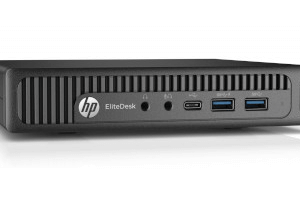
We examine hardware virtualization, dual booting, as well as using a compatibility layer.
Read more
This series recommends what to choose when buying a refurbished mini PC to run Linux as a desktop computer.
Read more
Protect yourself against tracking, surveillance, and censorship with the Tor Browser. Surf the net in safety.
Read more
Linux for Starters is a series that offers a gentle introduction to Linux for newcomers.
Read more
For this weekly blog we set up hardware graphics acceleration in Firefox.
Read more
J is a very terse array programming language most suited to mathematical and statistical programming. Here’s our recommended J resources.
Read more
This series recommends what to choose when buying a refurbished mini PC to run Linux as a desktop computer.
Read more
what3words is an easy way to identify precise locations. This app features in our Best Free Android Apps series.
Read more
Tuner is billed as a minimalist radio station player. It’s free and open source software written in Vala. Designed for elementary OS it runs on other popular Linux distros.
Read more
Our weekly blog looks at the HP EliteDesk 800 G2 Mini Desktop PC testing its multimedia capabilities.
Read more
The J programming language, developed in the early 1990s by Kenneth E. Iverson and Roger Hui, is an array programming language based primarily on APL
Read more
This is a moment in history for us to remember. An open source operating system built by thousands flies a helicopter on another planet.
Read more
This series recommends what to choose when buying a refurbished mini PC to run Linux as your desktop computer.
Read more
Joplin is a free, open source note taking and to-do application, which can handle a large number of notes organized into notebooks.
Read more
mmtc is billed as a minimal MPD terminal client that aims to be simple yet highly configurable.
Read more
We run a series of benchmarks on the HP EliteDesk 800 G2 Mini Desktop PC on the Manjaro distribution.
Read more