

Panda3D is an open source 3D game engine originally developed and actively maintained by the Walt Disney VR Studio. For the open source community, additional development is provided by Carnegie Mellon University.
The engine includes graphics, audio, I/O, collision detection, and other functionality useful for the creation of 3D games. It is a scene graph engine where the virtual world is initially an empty Cartesian space into which the game programmer inserts 3D models.
Panda3D’s intended game-development language is Python. The engine itself is written in C++, and uses an automatic wrapper-generator to expose the complete functionality of the engine in a Python interface.
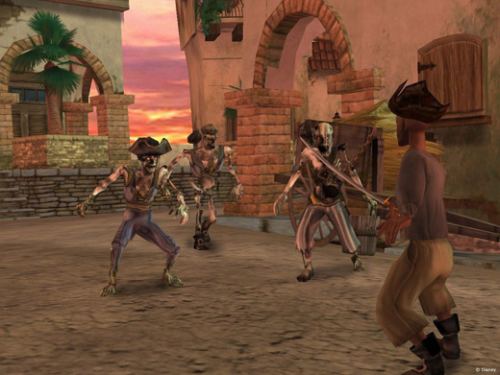
Panda3D is used by developers of several large commercial games, some open source projects, and a number of university courses.
Features include:
- Shader Generation:
- Special Maps: Normal Map, Gloss Map, Glow Map.
- HDR Rendering: Tone Mapping, Bloom Filter.
- Cel Shading: Threshold Lighting, Inking.
- Performance Monitoring:
- Identifies bottlenecks, both CPU and GPU.
- CPU time use decomposed into more than 250 categories.
- Counts meshes, polygons, textures, transforms, state changes, etc.
- Allows user-defined CPU-usage categories.
- Tools for batching and state-change minimization.
- Tools to merge textures and minimize texture switches.
- Graphics API:
- High-level shader language: Cg.
- Powerful interface between shaders and engine.
- Support for render-to-texture.
- Use of depth/shadow/stencil textures.
- Debugging Tools:
- Extreme resistance to crashing, even when errors are made.
- More than 5000 assertion-checks to catch errors early.
- Reference-counted data structures minimize memory leaks.
- Many tools to examine internal state.
- Python Integration:
- Highly optimized: all core functionality in C++.
- Thoroughly-tested: two commercial MMOs in Python.
- Panda3D structures garbage collected when using Python.
- Manual and sample programs use Python.
- 3D audio:
- Choose from OpenAL, FMOD and Miles or other sound libraries.
- Networking.
- Keyboard and mouse support.
- Support for unusual I/O devices.
- Mature system:
- Converters for older file formats.
- Font file importers.
- Tool to package games into redistributables.
- Means to pack art assets into encrypted bundles.
- Lots of other boring but essential stuff.
Website: www.panda3d.org
Support: Documentation
Developer: Walt Disney VR Studio Carnegie Mellon Entertainment Technology Center
License: Modified BSD License
Panda3D is written in C++ and Python. Learn C++ with our recommended free books and free tutorials. Learn Python with our recommended free books and free tutorials.
| Explore Linux | |
|---|---|
 | Best Free and Open Source Software - A huge collection of recommended free and open source software covering every major category. |
 | In-depth Linux Software Reviews - Detailed assessments of Linux software covering features, usability and overall quality. |
 | The Big List of Active Linux Distros - An extensive collection of actively developed Linux distributions. |
 | Open Source Alternatives - Alternatives to software and services from Google, Microsoft, Apple, Adobe, IBM, Autodesk, Oracle and others. |
 | Essential Linux System Tools - Indispensable utilities for monitoring, maintaining and managing Linux systems. |
 | Linux Productivity Tools - Useful utilities for improving productivity and streamlining everyday tasks. |
 | Alternatives to Popular CLI Tools - Modern alternatives to familiar command-line utilities supplied with Linux systems. |
 | Awesome Free Linux Game Tools - Tools, utilities and companion software that improve gaming on Linux. |
 | Machine Learning on Linux - Machine learning and deep learning software, self-hosted applications and practical tools. |
 | Saving Money with Linux - Practical ways to reduce electricity consumption and lower computing costs with Linux. |
 | Linux Candy - Fun, entertaining and sometimes delightfully quirky software from the lighter side of Linux. |
Please read our Comment Policy before commenting.