
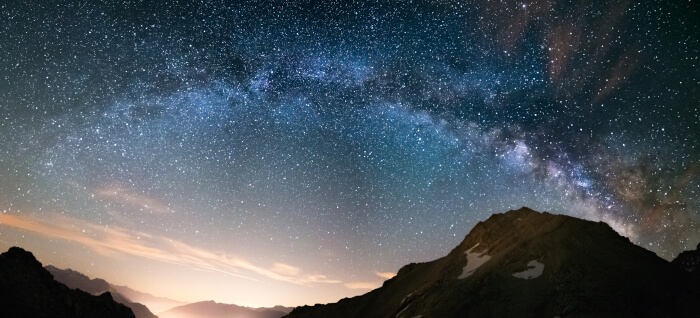
jdaviz is a suite of interactive astronomical data visualisation and analysis tools developed as part of the Space Telescope Science Institute’s wider data analysis ecosystem.
It combines graphical data exploration with scientific analysis and is built around the Jupyter platform. The same software can operate within a Jupyter notebook, as a standalone application, or embedded within a website, allowing researchers to move between interactive and programmatic workflows without adopting an entirely different interface.
jdaviz provides specialised viewers for several forms of astronomical data. Image viewers handle two-dimensional imagery and support operations such as aperture photometry and catalogue exploration. Spectrum viewers work with one- and two-dimensional spectra and provide extraction, measurement and spectral-line fitting facilities. Cube viewers support spectroscopic data cubes and extraction of one-dimensional spectra.
Table, scatter and histogram viewers provide additional ways to explore catalogue and tabular data. The application is particularly designed around observational modes from the James Webb Space Telescope, although its data handling is intended to support observations from other astronomical facilities as well.
This is free and open source software.
Key Features
- Interactive astronomical data visualisation and analysis.
- Image, spectrum and spectroscopic cube viewers.
- Table, scatter and histogram exploration.
- Aperture photometry and catalogue analysis.
- Spectral extraction, measurements and line fitting.
- Designed with JWST observing modes in mind.
- Runs within Jupyter or as a standalone application.
Website: github.com/spacetelescope/jdaviz
Support:
Developer: JDADF Developers
License: BSD 3-Clause “New” or “Revised” License
jdaviz is written in Python. Learn Python with our recommended free books and free tutorials.
Related Software
| Astronomical Data Analysis Tools | |
|---|---|
| Astropy | Collection of Python software packages for astronomy |
| CARTA | Cube Analysis and Rendering Tool for Astronomy |
| AstroImageJ | Powerful tool for astronomical image analysis and precise photometry |
| TOPCAT | Tool for OPerations on Catalogues And Tables |
| astroML | Python module for machine learning and data mining |
| DS9 | Astronomical imaging and data visualization application |
| Siril | Astronomical image (pre-)processing software |
| Skyfield | Pure-Python astronomy package |
| Sherpa | Modeling and fitting application for Python |
| IRAF | Image Reduction and Analysis Facility |
| PyRAF | Python-based IRAF command language |
| THELI | Tool for the automated reduction of astronomical images |
| SunPy | Python ecosystem for accessing and analysing solar physics data |
| Gammapy | Python package for analysing gamma-ray astronomical observations |
| jdaviz | Interactive visualisation and analysis suite for astronomical data |
| Gnuastro | Processes and analyses astronomical datasets |
| ASTAP | Astrometric STAcking Program |
| FIPS | OpenGL FITS image viewer for astronomical data |
| ORSA | Framework for celestial mechanics investigations |
| CRUSH | Data reduction and imaging for select astronomical cameras |
Read our verdict in the software roundup.
 Explore our carefully curated directory of recommended free and open source software, covering every major software category. Explore our carefully curated directory of recommended free and open source software, covering every major software category.The directory forms part of our extensive collection of articles for Linux enthusiasts. It includes hundreds of detailed reviews, together with free and open source alternatives to proprietary software from companies such as Google, Microsoft, Apple, Adobe, IBM, Cisco, Oracle, and Autodesk. LinuxLinks also covers interesting projects worth exploring, Linux-compatible hardware, free programming books and tutorials, and much more. Know a useful free and open source Linux application that we haven’t covered? Tell us about it using our submission form. |
Please read our Comment Policy before commenting.