
A linter is a tool used in software development to analyze source code for potential errors, stylistic issues, and adherence to coding standards. It essentially acts as a static code analyzer, examining the code without actually executing it. Linters help developers catch issues early in the development cycle, improving code quality and maintainability
Linters are useful tools for maintaining code quality and consistency in your Clojure applications. They analyze code for potential issues, enforce coding standards, and help catch errors before they are pushed into production. Linters are not necessarily a quick fix, can be a distraction, and it’s not inconceivable that they may not be helpful with old, large code bases.
This article picks some useful tools to help you fix Clojure code.
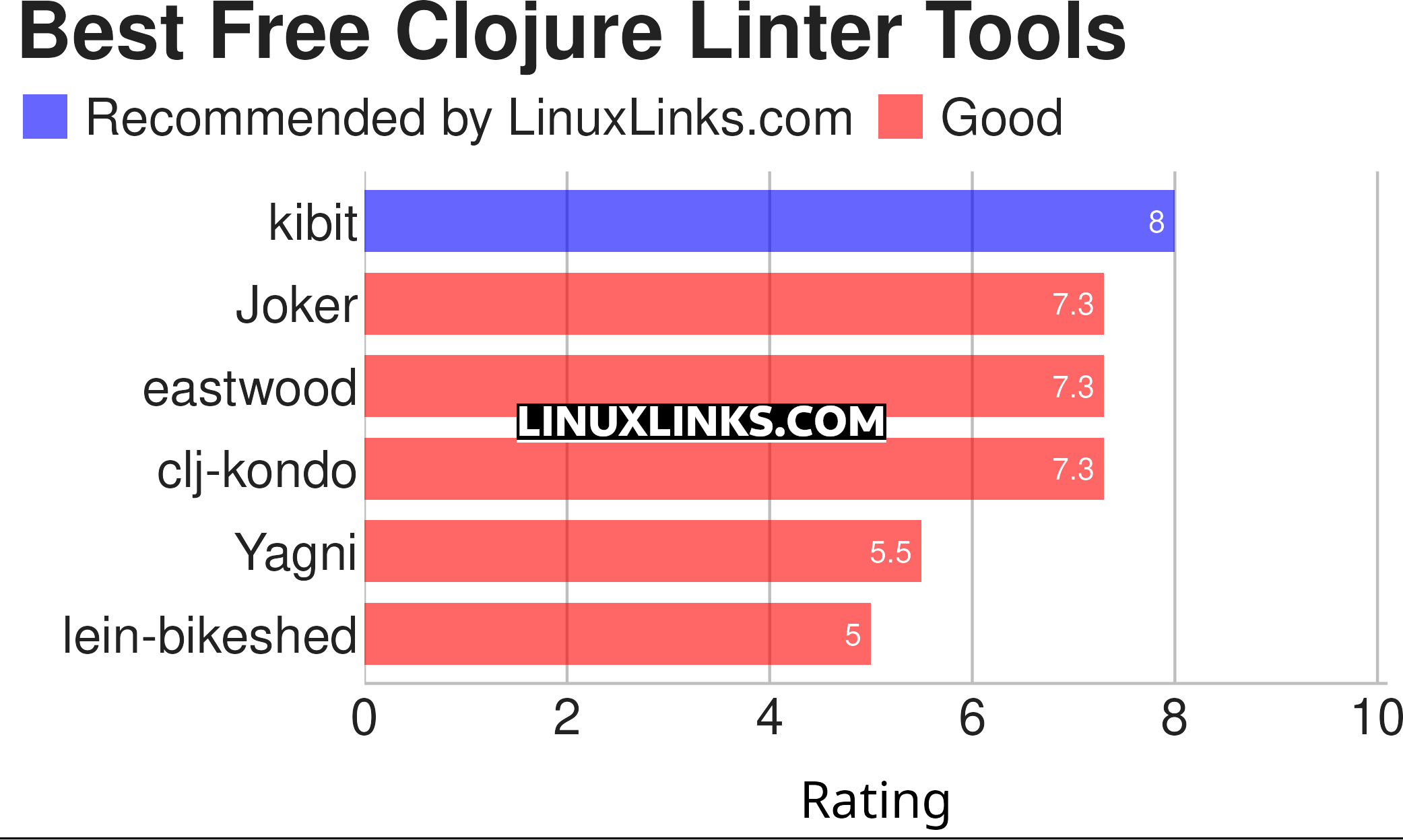
Here’s our verdict captured in a legendary LinuxLinks-style ratings chart. Only free and open source software is eligible for inclusion here.
Click the links in the table below to learn more about each tool.
| Clojure Linter Tools | |
|---|---|
| kibit | Static code analyzer for Clojure, ClojureScript, cljx and other Clojure variants |
| Joker | Small Clojure interpreter, linter and formatter |
| eastwood | Inspects namespaces and reports possible problems |
| clj-kondo | Static analyzer and linter for Clojure |
| Splint | Focuses on style and code shape |
| Yagni | Leiningen plugin for finding dead code |
| lein-bikeshed | Leiningen plugin |
 LinuxLinks helps you discover the best free and open source software for Linux. Explore our extensive collection of recommended applications, including alternatives to popular proprietary software. We also publish software reviews, Linux tutorials, hardware reviews, free programming books and articles covering the wider open source community. Browse our Linux resources to discover more. Know a useful free and open source Linux application we haven't covered? Suggest a program for inclusion. Has your software been featured on LinuxLinks? Display one of our Featured on LinuxLinks badges on your website or GitHub README. |
Please read our Comment Policy before commenting.