

Ludora is a Fedora-based Linux distribution built for gaming systems that also need reliable rollback facilities.
It combines a KDE Plasma desktop with a custom gaming-oriented kernel, preinstalled gaming tools, and an installer configuration that sets up bootable Btrfs snapshots so users can recover from problematic updates or system changes from the GRUB boot menu.
Key Features
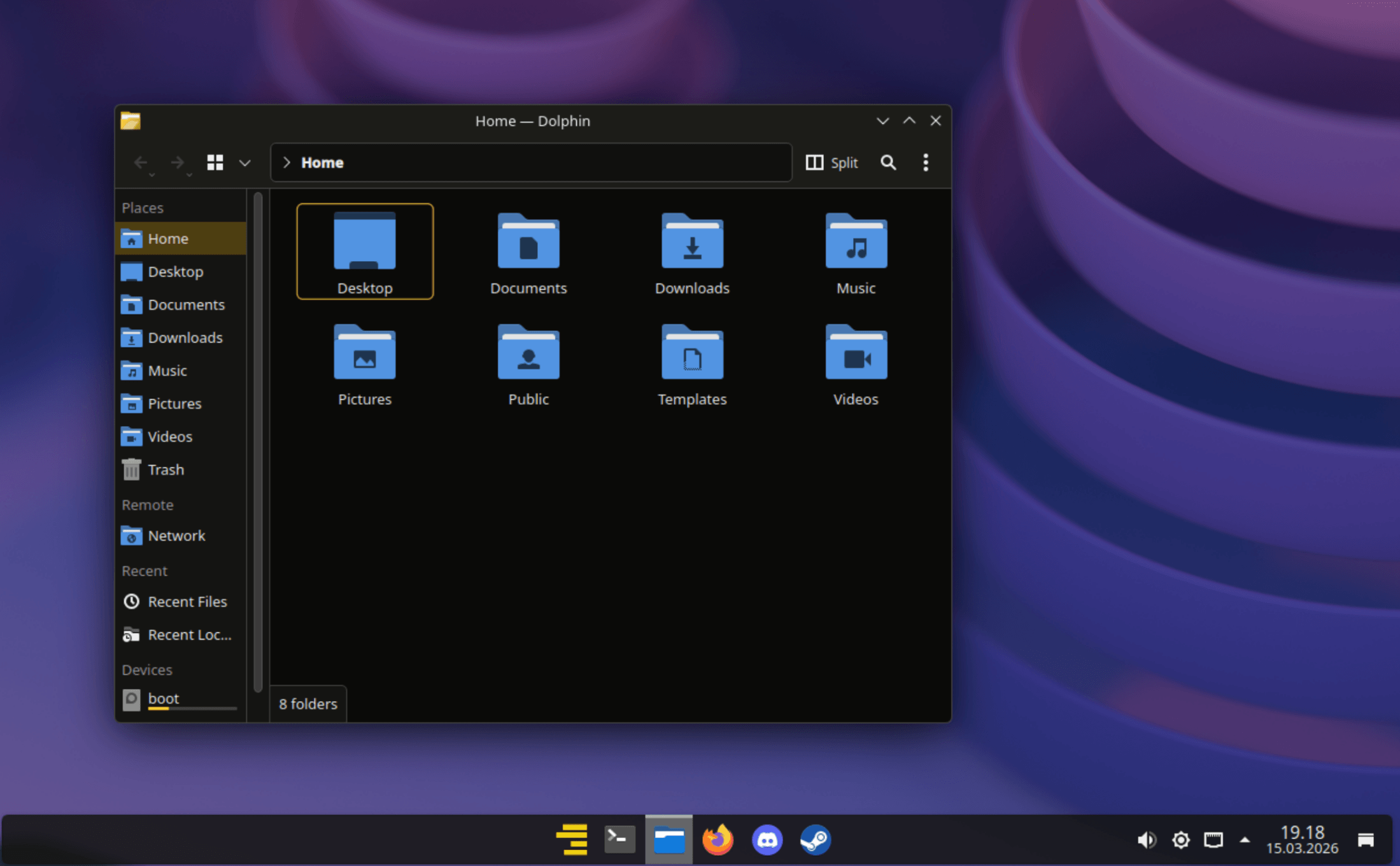
- Provides a KDE Plasma desktop with custom Ludora theming and gaming-focused defaults.
- Creates automatic Btrfs snapshots before and after DNF package operations.
- Integrates snapshots into GRUB so previous system states can be booted directly.
- Includes a one-click rollback workflow when booted into a snapshot.
- Ships with a custom kernel using the BORE scheduler and CachyOS performance patches.
- Includes Steam, Proton-GE, MangoHud, VA-API, Vulkan support, and multimedia codecs.
- Maintains custom packages through a public Fedora COPR repository.
| Working state: | Active |
| Desktop: | KDE Plasma |
| Init Software: | systemd |
| Package Management: | RPM |
| Release Model: | Fixed |
| Platforms: | x86_64 |
| Home Page: | sourceforge.net/projects/ludora |
| Developer: | predze |
| This article is part of our Big List of Active Linux Distributions and Open Source Operating Systems. |
What's a Linux distribution ("distro")? |
| A distro provides the user with a desktop environment, preloaded applications, and ways to update and maintain the system. Each distro makes different choices, deciding which open source projects to install and provides custom written programs. They can have different philosophies. Some distros are intended for desktop computers, some for servers without a graphical interface, and others for special uses. Because Linux is an open source operating system, combinations of software vary between Linux distros. |
Please read our Comment Policy before commenting.