

fu11m00n is a live, modular Linux distribution built around Slackware and drawing heavily on Porteus.
The distribution takes an unconventional approach to the standard Slackware/Porteus stack. It replaces glibc with musl and uses runit as its init system, while aiming to reduce its dependence on the GNU userland. BusyBox, Toybox and Uutils are among the alternative tools incorporated into the system.
fu11m00n is aimed primarily at advanced users. Security, minimalism and a small attack surface are major design themes. The project also uses what its developer calls “petrification”: selected system binaries are symlinked back to the read-only ISO image, preventing those files from being modified while the system is running.
Key Features
- Live and modular design derived from the Porteus approach.
- Uses musl rather than glibc as its primary C library.
- Uses runit as the init system.
- Employs BusyBox, Toybox and Uutils as alternatives to parts of the GNU userland.
- Includes hardened sysctl settings and other security-oriented configuration changes.
- Uses a mixture of Slackware packages and compressed modules.
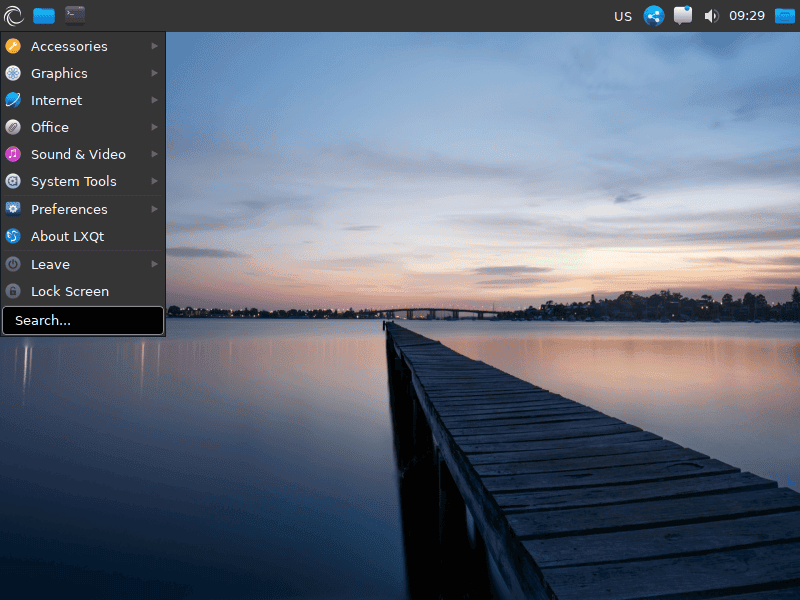
- Provides a graphical environment built around LXQt and Cutefish components.
- Targets experienced users rather than newcomers to Linux.
| Working state: | Active |
| Desktop: | LXQt, Cutefish |
| Init Software: | runit |
| Package Management: | TXZ |
| Release Model: | Fixed |
| Platforms: | x86_64 |
| Home Page: | oreivd96v420wee4.umso.co |
| Developer: | fu11m00n |
| This article is part of our Big List of Active Linux Distributions and Open Source Operating Systems. |
What's a Linux distribution ("distro")? |
| A distro provides the user with a desktop environment, preloaded applications, and ways to update and maintain the system. Each distro makes different choices, deciding which open source projects to install and provides custom written programs. They can have different philosophies. Some distros are intended for desktop computers, some for servers without a graphical interface, and others for special uses. Because Linux is an open source operating system, combinations of software vary between Linux distros. |
Please read our Comment Policy before commenting.