

ThorOS is an AI-first, local-first, voice-driven operating system built on Debian Linux.
It lets you operate the desktop by speaking or typing plain language requests, with an on-device AI planner routing tasks to agents for files, applications, documents, terminal commands, reminders, research, and more.
The project focuses on privacy, accessibility, and user control. Speech recognition, the language model, and text-to-speech can run locally by default, while cloud models remain optional for users who want extra power. ThorOS is designed so the assistant is not just another app, but the main way to interact with the computer.
Key Features
- Local-first AI assistant with optional cloud model support.
- Wake word, speech-to-text, planning, and spoken responses.
- Agent-based architecture for files, apps, documents, terminal, research, reminders, memory, and security.
- Permissioned actions with confirmations for potentially dangerous tasks.
- Sandboxing for untrusted community agents.
- Live ISO available for testing without installation.
- Designed with accessibility and hands-free computing in mind.
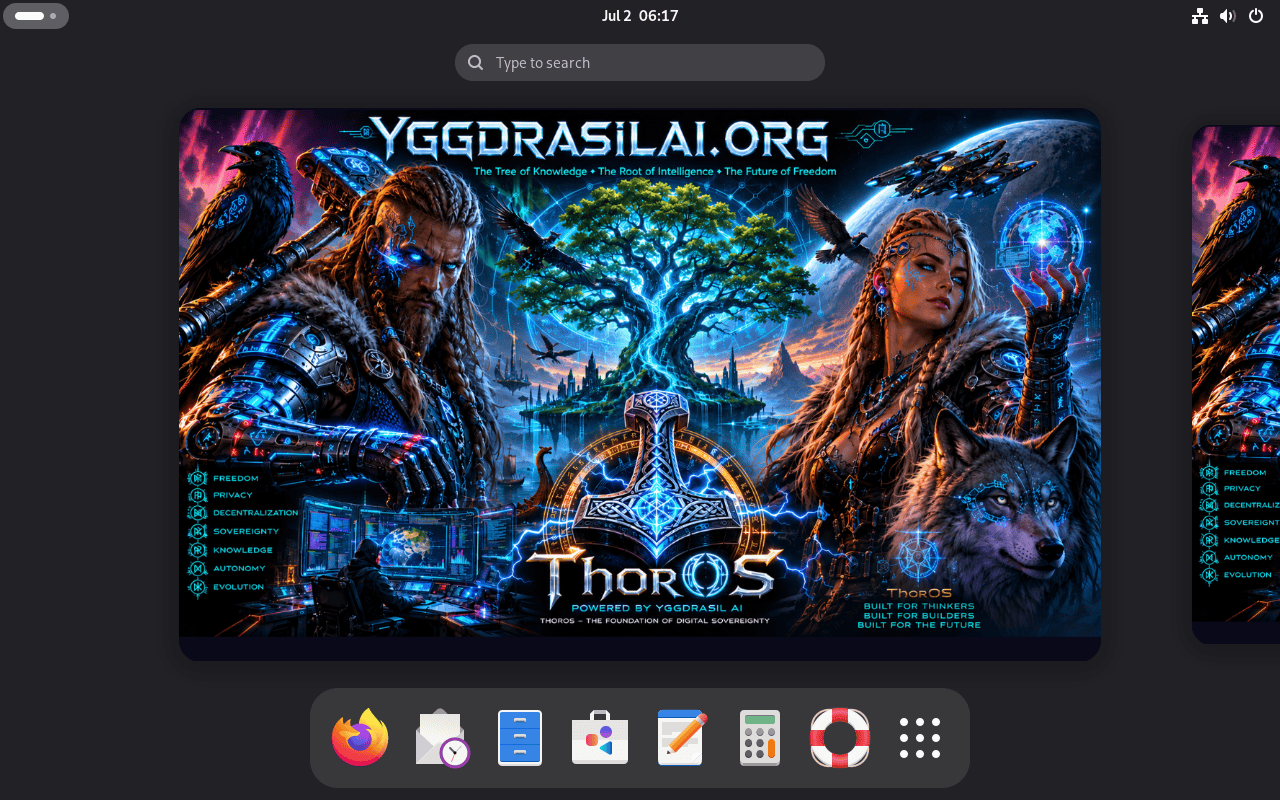
| Working state: | Active |
| Desktop: | GNOME |
| Init Software: | systemd |
| Package Management: | APT |
| Release Model: | Fixed |
| Platforms: | x86_64 |
| Home Page: | www.yggdrasilai.org |
| Developer: | YggdrasilAI |
| This article is part of our Big List of Active Linux Distributions and Open Source Operating Systems. |
What's a Linux distribution ("distro")? |
| A distro provides the user with a desktop environment, preloaded applications, and ways to update and maintain the system. Each distro makes different choices, deciding which open source projects to install and provides custom written programs. They can have different philosophies. Some distros are intended for desktop computers, some for servers without a graphical interface, and others for special uses. Because Linux is an open source operating system, combinations of software vary between Linux distros. |
Please read our Comment Policy before commenting.