

RakuOS is a Fedora-based hybrid atomic Linux distribution.
Its core operating system is delivered as an immutable bootc OCI image, with system updates applied transactionally so an update either completes as a whole or leaves the existing system intact. Previous system images can be rolled back when necessary.
RakuOS differs from many immutable distributions by providing a persistent overlay on /usr, allowing native RPM packages to be installed without rebuilding the base image. This combines an image-based system with much of the package-management flexibility of a conventional distribution. RakuOS describes itself as an early-development project and warns that its persistent overlay technology remains experimental.
This is free and open source software.
Key Features
- Built on Fedora with the base operating system distributed as bootc images.
- Includes Rum, a package-management tool aware of the split between the read-only base and user-installed packages.
- Lets users reset the package overlay to return the operating system to a clean state.
- Ships with Terra repositories enabled for additional packages, codecs and hardware support.
- Uses the P03 kernel, which is tuned for desktop responsiveness and efficiency.
- Provides dedicated tooling for installing and managing software.
- Supports Secure Boot with local key enrolment.
- Provides live installation media for x86_64 systems.
- Supports AMD, Intel and Nvidia graphics hardware.
- Includes facilities aimed at gaming, workstation and general desktop use.
- Uses Distrobox for isolated development and application environments.
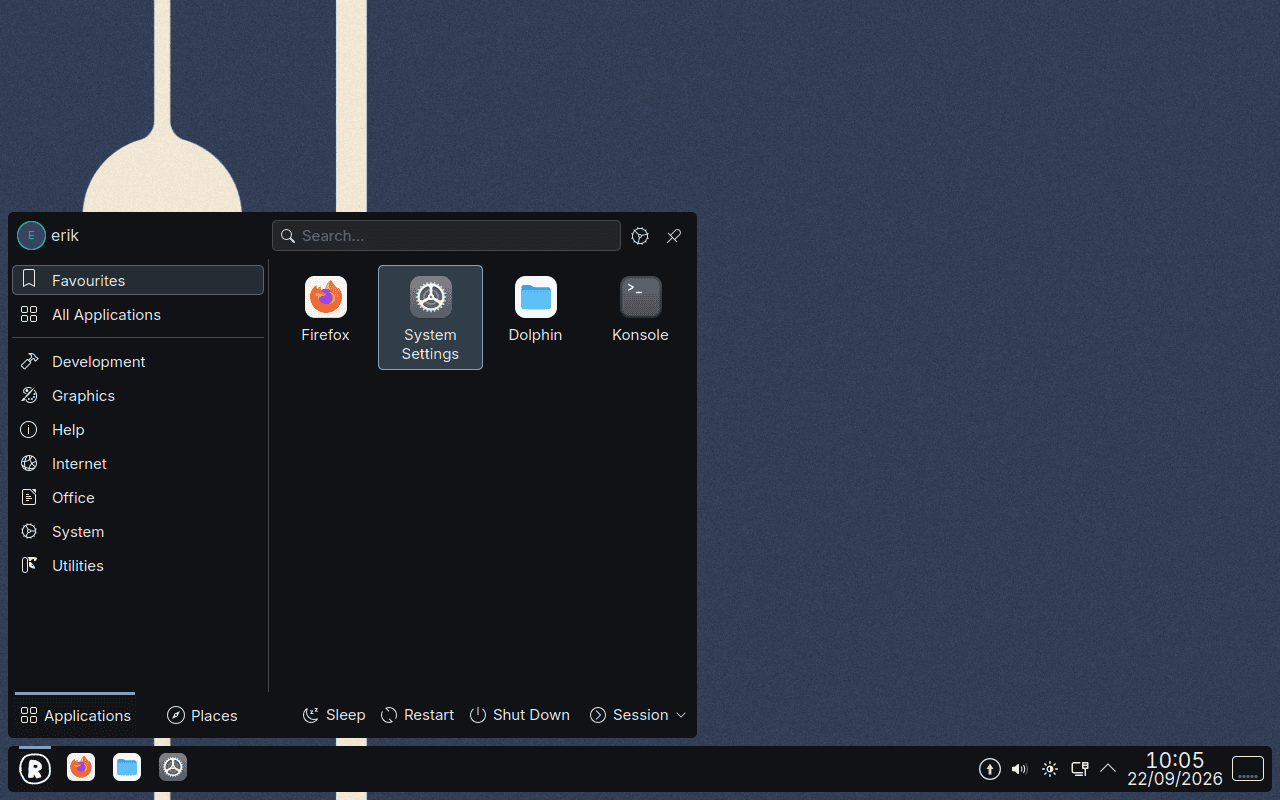
| Working state: | Active |
| Desktop: | KDE Plasma, GNOME, COSMIC, niri |
| Init Software: | systemd |
| Package Management: | Rum, RPM |
| Release Model: | Atomic |
| Platforms: | x86_64 |
| Home Page: | rakuos.org |
| Developer: | RakuOS Team |
This entry was written with the assistance of a visitor who completed the distro form.
| This article is part of our Big List of Active Linux Distributions and Open Source Operating Systems. |
What's a Linux distribution ("distro")? |
| A distro provides the user with a desktop environment, preloaded applications, and ways to update and maintain the system. Each distro makes different choices, deciding which open source projects to install and provides custom written programs. They can have different philosophies. Some distros are intended for desktop computers, some for servers without a graphical interface, and others for special uses. Because Linux is an open source operating system, combinations of software vary between Linux distros. |
Please read our Comment Policy before commenting.