
NETGEAR’s Orbi 770 Series Tri-Band WiFi 7 Mesh System brings next-generation wireless performance to larger homes without the complexity often associated with high-end networking kit. This RBE773 3-pack combines a router and two satellites, promising broad coverage, high-speed backhaul, and faster connections for busy households packed with phones, laptops, smart TVs, consoles, and IoT devices.
With WiFi 7 features such as Multi-Link Operation and 4K-QAM, the Orbi 770 aims to deliver lower latency and higher throughput than WiFi 6 systems. In this review, I test how it performs under real Linux-friendly home networking conditions. I’ll also compare its power consumption with an ISP-provided WiFi 6 router and a standalone WiFi 7 router.
What’s included in the box?
- 1 x Orbi WiFi 7 Router
- 2 x Orbi WiFi 7 Satellites
- 1 x Ethernet cable
- 3 x Power adapters
- 1 x Quick Start Guide
Design
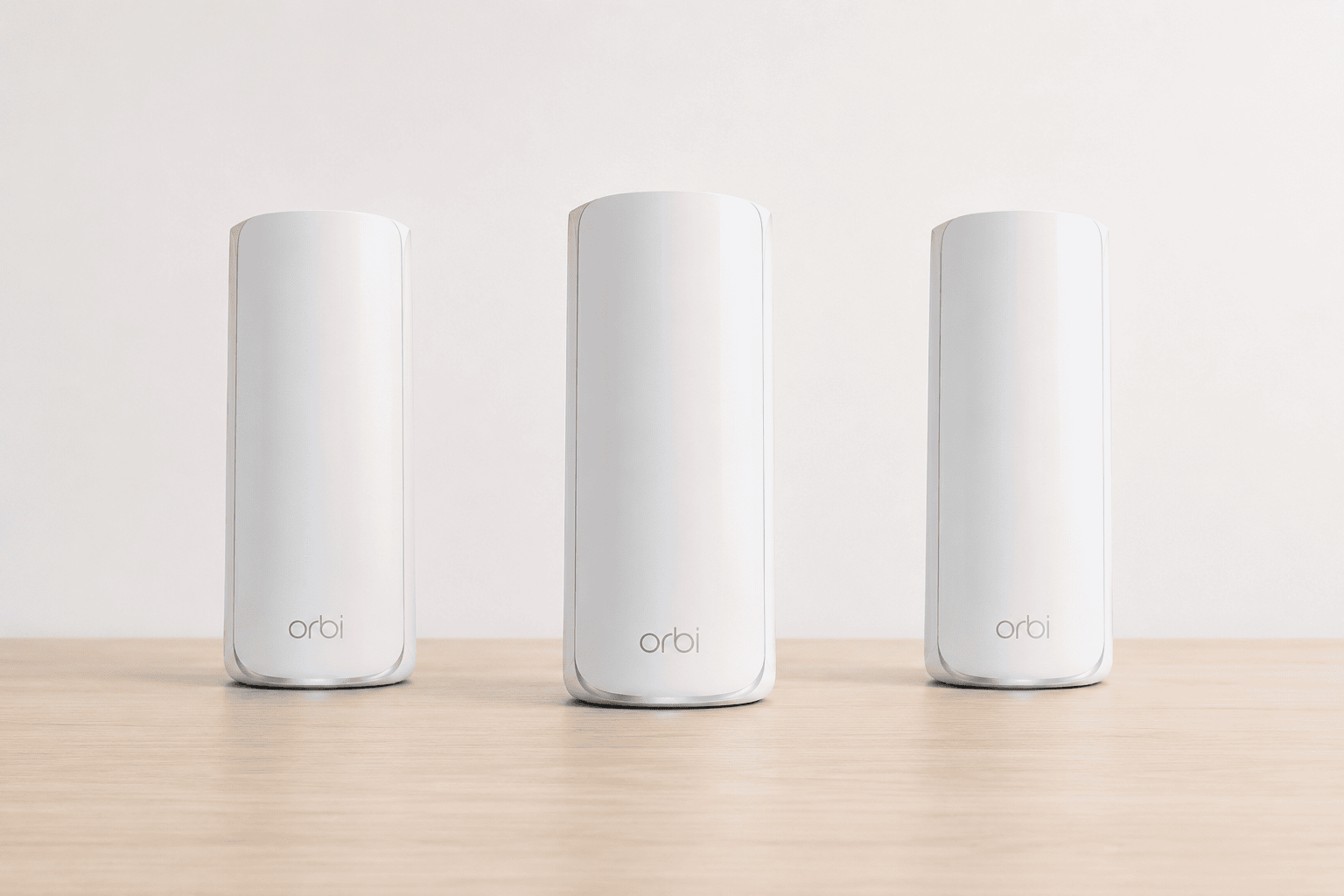
The router and satellites use NETGEAR’s familiar upright Orbi design. The units are quite tall, but the curved white casing is clean and unobtrusive, making them easier to place in living rooms, bedrooms, or offices than traditional networking hardware.
There are no cooling fans, so the system is silent in operation. Status lighting is kept simple, and the hardware avoids looking too technical. That suits the target audience: people who want strong WiFi everywhere, but do not necessarily want blinking racks of networking equipment.
One omission is a physical power button. Neither the router nor the satellites have a power switch, so a full shutdown or hard reboot means unplugging the unit or switching it off at the wall.
Connectivity
The RBE771 router offers one 2.5GbE WAN port and three 2.5GbE LAN ports.
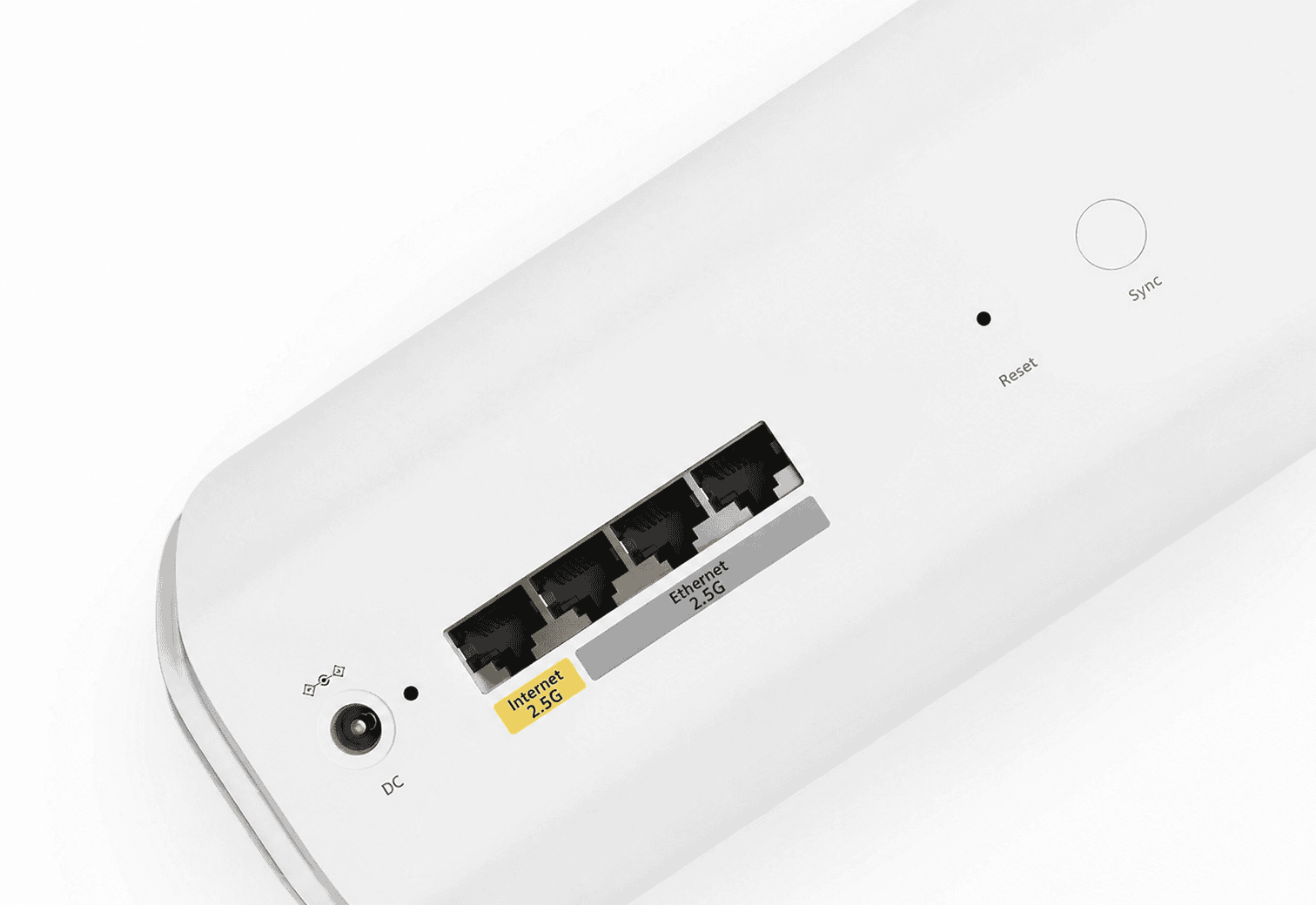
Each RBE770 satellite provides two 2.5GbE LAN ports. That is a useful specification, particularly for users with multi-gig broadband, a NAS, desktop PCs, media servers, or wired gaming hardware.
The downside is that the number of ports may be tight for some households. Once the router is connected to the modem and a few wired devices, the available LAN ports can disappear quickly. Anyone planning to use wired backhaul, a NAS, and several Ethernet devices may want to budget for a small 2.5GbE network switch.
There is no USB port, so the Orbi 770 cannot be used for simple USB storage or printer sharing. There is also no 10GbE, which is understandable at this level, but worth noting for users building a faster wired network.
Setup and Management
Setup is simple. The satellites are designed to pair with the router with minimal intervention, and the Orbi app guides you through the process.
The app covers the core features: network status, attached devices, guest WiFi, basic WiFi settings, firmware updates, and speed checks. More advanced options are available through the web interface, including DHCP reservations, port forwarding, VPN support, VLAN settings, and IPv6. You don’t need to use the app, though. The system can also be managed through the web interface.
This is not a mesh system for people who want deep wireless tuning. NETGEAR keeps the experience controlled and simplified. That makes the system easy to live with, but more advanced users may find the WiFi configuration limited compared with more enthusiast-focused routers.
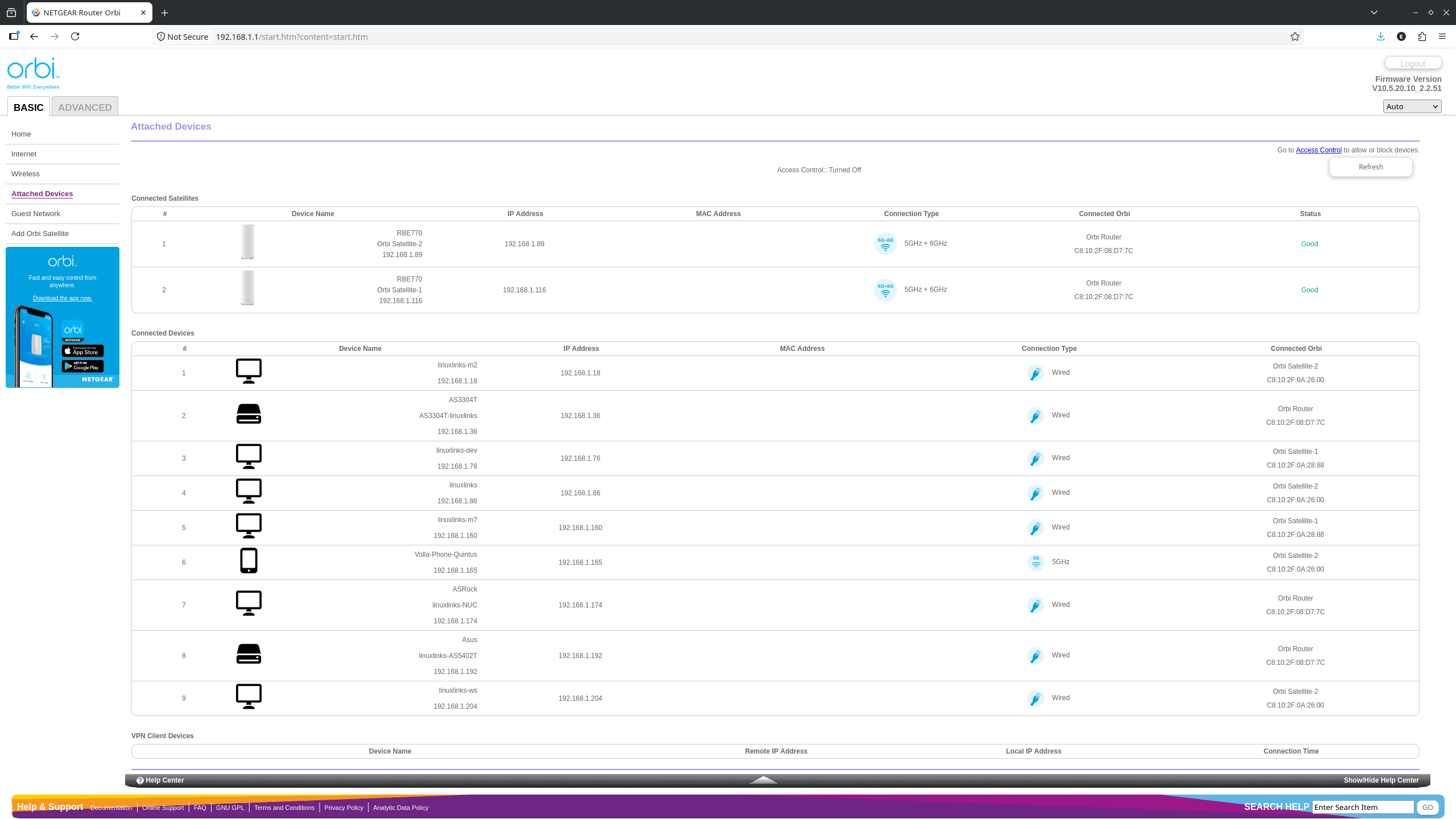
The web interface is easy to use, and getting the system up and running is straightforward. For my testing, I connected a variety of devices to the main router as well as the satellites. Besides the devices shown below, I also tested the system with some desktop machines.
WiFi 7 Performance
The Orbi 770 supports WiFi 7 across the 2.4GHz, 5GHz, and 6GHz bands with features such as Multi-Link Operation and 4K-QAM. In practical terms, the goal is higher throughput, lower latency, and better handling of multiple connected devices.
Close to the router, the system is capable of excellent wireless speeds with modern WiFi 7 clients. It has the performance needed for large downloads, high-bitrate streaming, cloud backups, video calls, and heavy household use.
Satellite performance typically depends heavily on placement. The Orbi 770 is a tri-band system, but NETGEAR uses WiFi 7 Multi-Link Operation as part of its Enhanced Backhaul design, exploiting both the 5GHz and 6GHz bands for the mesh connection. I was still expecting satellite placement to be important. In fact, that proved not to be the case for my setup.
I started my testing by placing a single satellite in my home office, choosing a convenient spot without making any effort to optimise its position.
The office is on a different floor from the router, and the wireless signal has to pass through both a ceiling and a thick wall. It is a demanding environment for WiFi, where achieving even half the speed of a 2.5GbE connection is normally difficult.
I connected the mini PCs and desktop systems in the office to the satellite via Ethernet. As the satellite has only two Ethernet ports, I also used a network switch.
Although the machines themselves are connected over Ethernet, the backhaul between the satellite and router remains wireless.
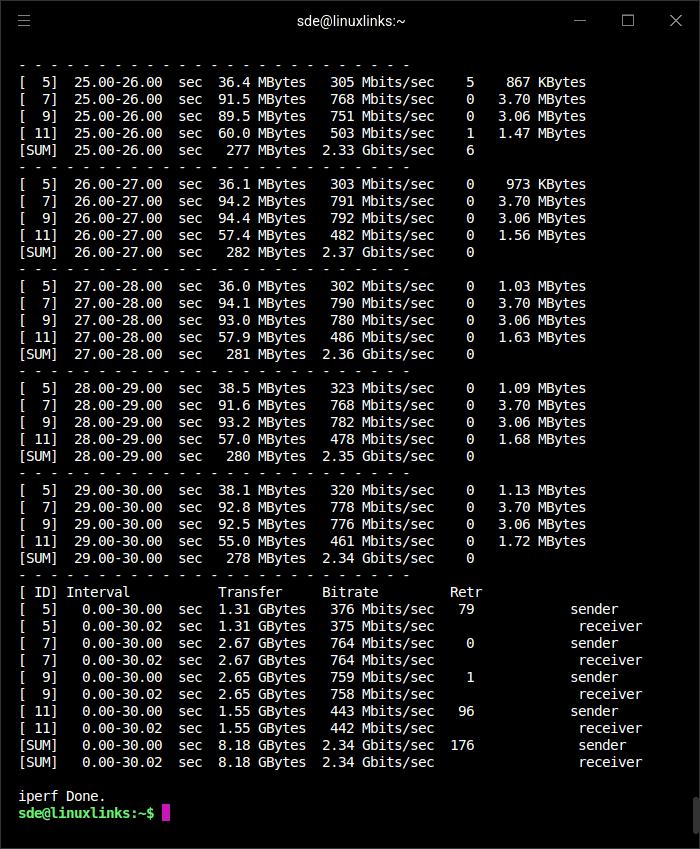
The wireless backhaul sustained 2.34 Gbit/s throughout the 30-second test, effectively pushing the 2.5GbE connection to its practical limit. Throughput remained remarkably consistent at around 2.33–2.37 Gbit/s.
In real terms, the wireless backhaul is delivering performance virtually indistinguishable from a direct 2.5GbE wired connection. And that’s without making any effort to find the optimum position for the satellite. I simply placed it in a convenient, fairly random spot.
I also ran Speedtest from a mini PC in the office connected to the satellite by 2.5GbE. It recorded 2,322 Mbps download and 2,240 Mbps upload. The connection between the satellite and router remained entirely wireless. The 2,322 Mbps download figure is effectively the limit of my internet connection; a system connected directly to the router by Ethernet delivers no higher speeds. This is an impressive real-world demonstration of the wireless backhaul’s performance.

I wasn’t expecting such a strong result, especially from a setup using just a single satellite. The benefit of having two satellites is clear, though. I placed the second unit in another upstairs room and connected devices to that satellite instead. Once again, performance was virtually indistinguishable from a direct 2.5GbE wired connection.
Software Features
The Orbi 770 provides the essentials out of the box, including main, guest, and IoT networks. The IoT network is useful for separating smart home devices from primary laptops, desktops, phones, and tablets.
NETGEAR also offers subscription-based extras such as Armor security and Smart Parental Controls. These features may appeal to families, but it is disappointing that some of the more advanced protection and parental tools sit behind recurring payments on an already premium mesh system.
The basic system is perfectly usable without subscribing, but buyers should be aware that the full software package costs extra.
Power Consumption
A mesh system will always use more power than a single router because several units are running continuously. The Orbi 770 has three active devices in the RBE773 pack, so total power draw matters if the system is left on 24/7.
The chart compares the power consumption of three routers at idle and under sustained iperf3 network traffic.
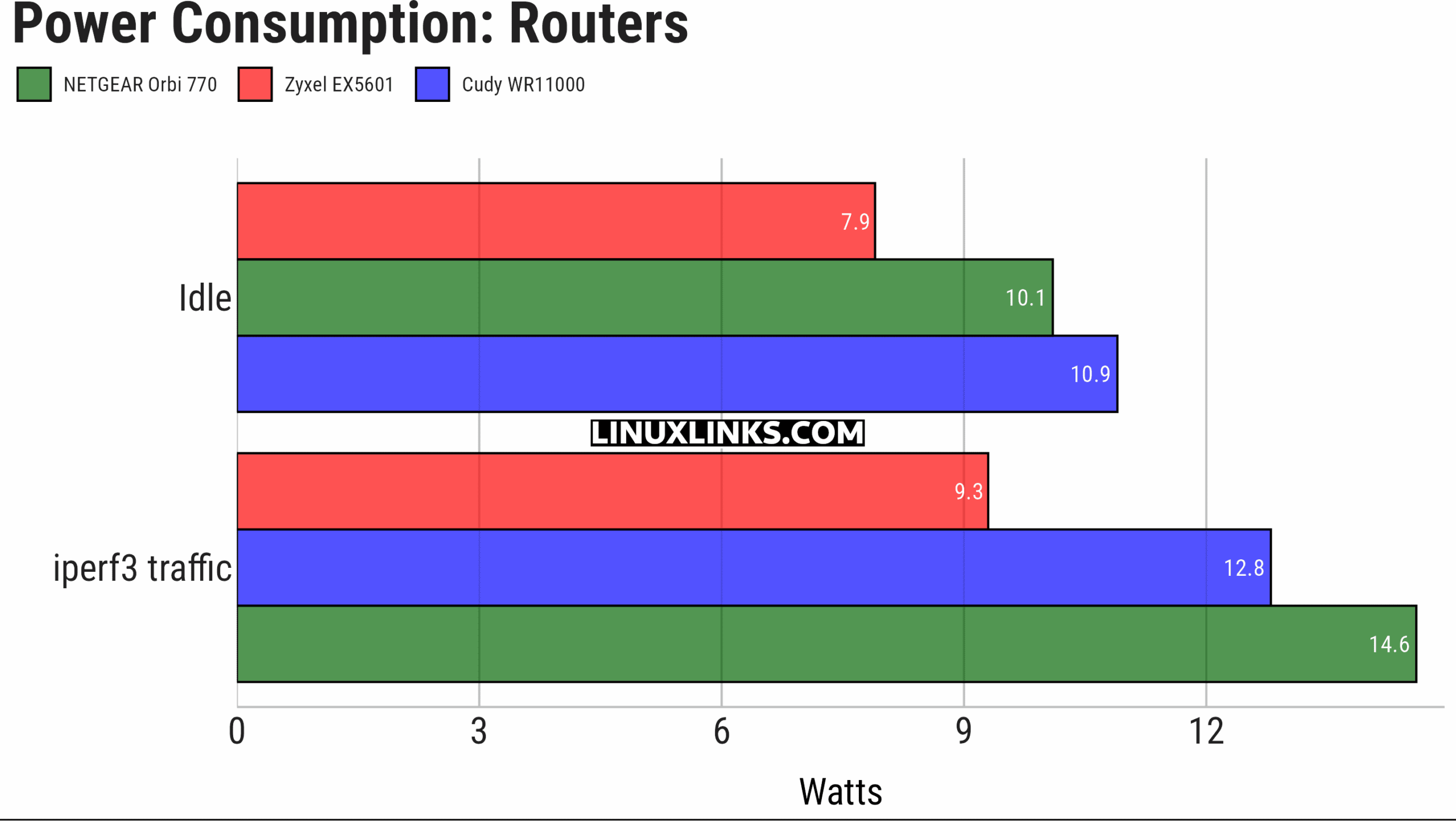
For the NETGEAR Orbi 770, the figures shown are for the router only and do not include either of the two satellites. Each satellite draws around 9.0 W at idle, so their consumption needs to be factored in when considering the power requirements of the complete Orbi system. Together, the two satellites add roughly 18 W before any additional load-related power consumption.
I excluded the satellites from the chart to provide a fairer like-for-like comparison with the standalone Zyxel EX5601 and Cudy WR11000 routers.
Verdict
The NETGEAR Orbi 770 Series RBE773 is a strong WiFi 7 mesh system for larger homes that need reliable whole-home coverage. It is easy to set up, simple to manage, silent in operation, and offers useful 2.5GbE connectivity across the router and satellites.
Its strengths are coverage, stability, ease of use, and multi-gig wired support. But the standout feature in my testing was the wireless backhaul. Even with a satellite placed in a challenging, completely unoptimised location, throughput was virtually indistinguishable from a direct 2.5GbE wired connection.
There are caveats. There is no physical power button on the router or satellites. There is no USB port, no 10GbE, and the number of Ethernet ports may be insufficient for some setups. Users with several wired devices should consider adding a 2.5GbE network switch.
The RBE773 is not the cheapest route to WiFi 7 and it is not aimed at advanced network tweakers. But for users who want fast, dependable, wide-area WiFi with minimal fuss, the Orbi 770 Series is a polished and highly capable mesh system. For my setup, it has been superb in terms of raw performance and stability.
For many UK homes, the three-pack may even be overkill. My testing suggests the Orbi 770 has substantial coverage and performance headroom, particularly given the generally shorter distances involved in smaller properties.
At the time of writing, the system is available for £589.98 on Amazon UK. That’s not an affiliate link.
Please read our Comment Policy before commenting.
Are the guest and IOT networks actually segregated from the LAN network? I had a previous version of the ORBI and was quite shocked to discover that the Guest network was simply a different SSID for the wireless but had full access to my LAN. There was no way to block access to my LAN.
Made the switch to TP-Link Omada and I’m much happier now. But Omada is really aimed at business or more advanced users.
Hi John
That’s a good question. I’ve written an article exploring this for you and everyone else interested.
https://www.linuxlinks.com/netgear-orbi-770-guest-iot-networks-really-isolated/