

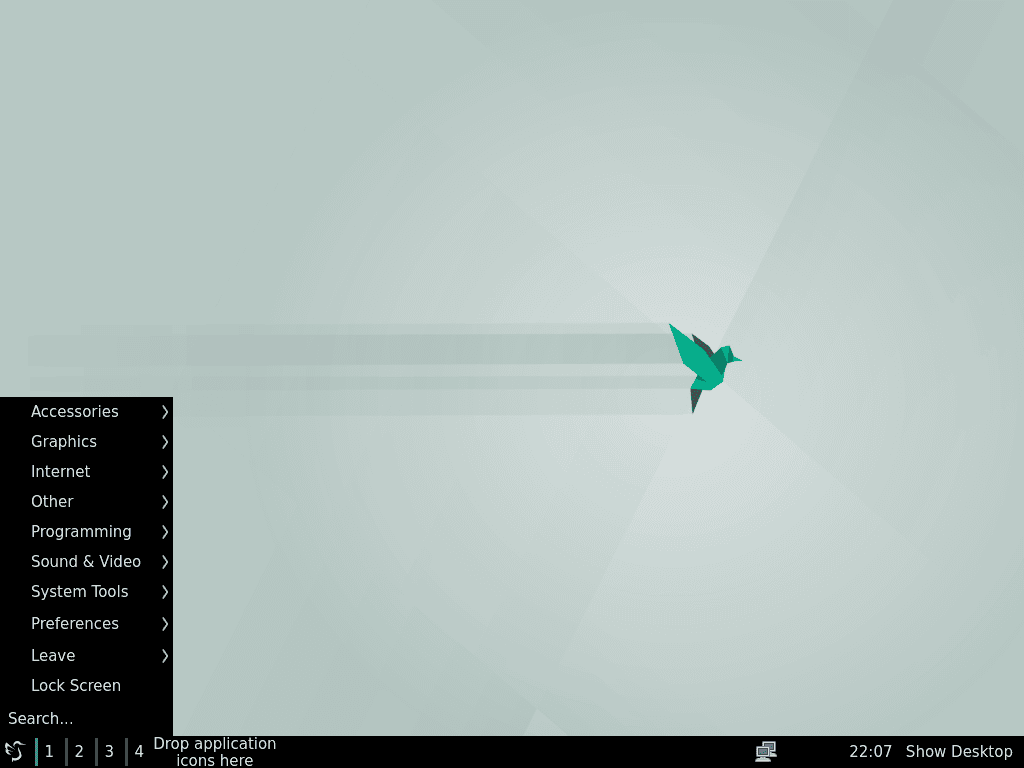
Gamma Linux is an ultra-light Linux distribution designed to revive older computers and low-spec hardware. It uses lightweight components such as LXQt and Openbox, with ZRAM tuning to reduce memory pressure on machines with limited RAM. It’s based on Debian and Ubuntu.
The distribution is offered in different editions targeting 32-bit legacy systems, 64-bit systems with 1GB RAM, and newer low-power computers. It avoids Snap, Flatpak, and telemetry, focusing instead on a small ISO, APT-based package management, and a responsive desktop environment.
Key Features
- Ultra-light Linux distribution for older and low-spec computers.
- Includes LXQt and Openbox for a responsive desktop experience.
- Uses ZRAM tuning to improve performance on memory-constrained PCs.
| Working state: | Active |
| Desktop: | LXQt, Openbox |
| Init Software: | systemd |
| Package Management: | APT |
| Release Model: | Fixed |
| Platforms: | i386, x86_64 |
| Home Page: | takismartgamer123-rgb.github.io/Gamma-Linux-page |
| Developer: | Taki |
| This article is part of our Big List of Active Linux Distributions and Open Source Operating Systems. |
What's a Linux distribution ("distro")? |
| A distro provides the user with a desktop environment, preloaded applications, and ways to update and maintain the system. Each distro makes different choices, deciding which open source projects to install and provides custom written programs. They can have different philosophies. Some distros are intended for desktop computers, some for servers without a graphical interface, and others for special uses. Because Linux is an open source operating system, combinations of software vary between Linux distros. |
Please read our Comment Policy before commenting.
Hello, i am so honored for my distro to be featured here , thanks really