

Lightwhale is a lightweight Linux distribution built using Buildroot, designed specifically for running Docker containers. It provides a minimal server environment that boots directly from a live ISO into a fully operational Docker Engine, without requiring a conventional installation.
The distribution uses an immutable root filesystem stored as a compressed SquashFS image. Both the Linux kernel and root filesystem are loaded into RAM during startup. This approach keeps the core operating system separate from application data and configuration, reducing the complexity of maintaining a container host.
Lightwhale provides optional persistent storage through a separate data filesystem. By default, changes are stored temporarily in RAM, but persistence can be enabled on a dedicated storage device. Btrfs is used for newly created persistent filesystems, with support for snapshots and RAID1 configurations across multiple devices.
The distribution is intended for home laboratories, self-hosted services and container deployments on physical or virtual machines. It supports conventional BIOS and UEFI booting, includes guest integration for QEMU/KVM and VMware environments, and uses a simple SysV-style init system. Lightwhale has no graphical desktop or conventional package manager; applications are deployed through Docker.
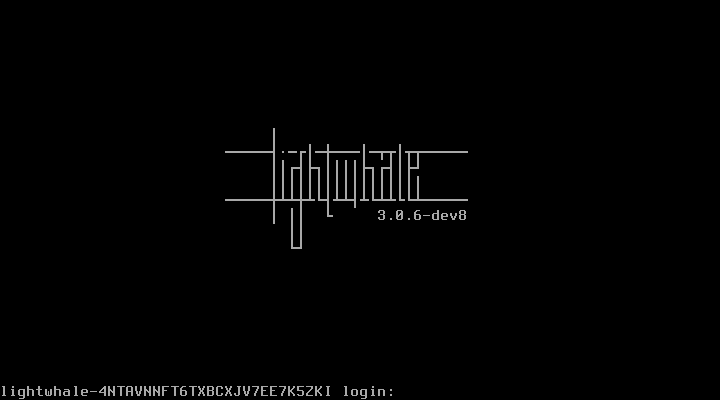
| Working state: | Active |
| Desktop: | None |
| Init Software: | SysV-style init |
| Package Management: | None – Docker containers |
| Release Model: | Fixed |
| Platforms: | x86_64 |
| Home Page: | lightwhale.asklandd.dk |
| Developer: | Stephan Henningsen |
| This article is part of our Big List of Active Linux Distributions and Open Source Operating Systems. |
What's a Linux distribution ("distro")? |
| A distro provides the user with a desktop environment, preloaded applications, and ways to update and maintain the system. Each distro makes different choices, deciding which open source projects to install and provides custom written programs. They can have different philosophies. Some distros are intended for desktop computers, some for servers without a graphical interface, and others for special uses. Because Linux is an open source operating system, combinations of software vary between Linux distros. |
Please read our Comment Policy before commenting.