

VasakOS is an Arch Linux-based distribution developed in Argentina.
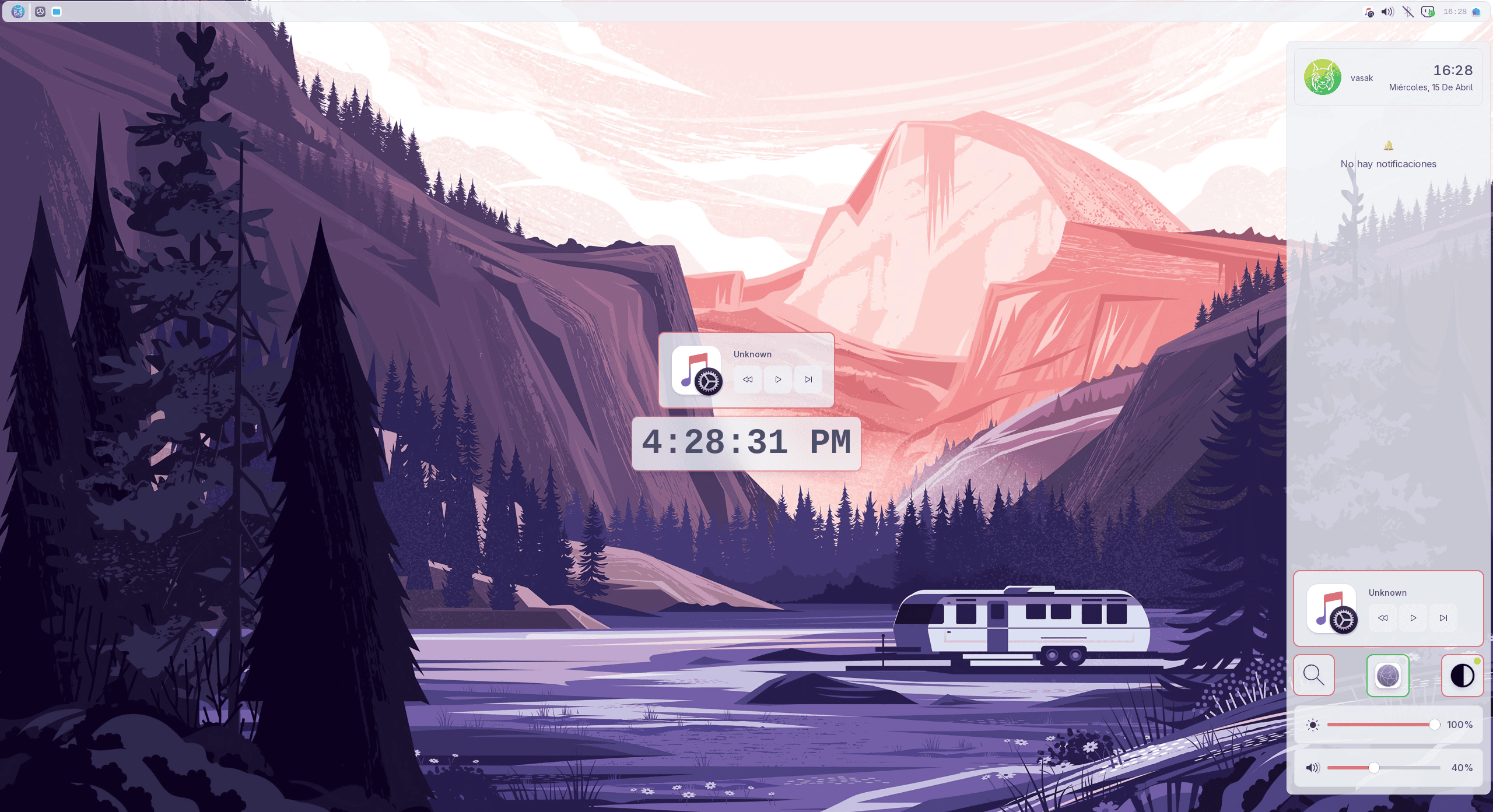
Rather than assembling a desktop from applications borrowed from several environments, the project develops its own desktop shell and core applications with a shared design. The desktop uses Wayland with Wayfire, while much of the Vasak software stack is built with Rust, Tauri and Vue. Arch Linux remains underneath, giving users access to pacman, the AUR and the wider Arch ecosystem.
Key Features
- Custom Wayland desktop using Wayfire.
- Desktop shell, top bar and application menu developed specifically for VasakOS.
- Core applications share a common Rust, Tauri and Vue technology stack.
- CSS-based interface styling makes the desktop highly customisable without recompiling applications.
- Dedicated file manager with multiple tabs and split-window support.
- Vasak Settings brings system configuration into a unified interface.
- Includes its own terminal, image gallery and Resonance music player.
- Native keyring replaces gnome-keyring and uses AES-256-GCM encryption with Argon2id key derivation.
- Custom session manager and PolicyKit authentication agent.
- Vasak Connect provides Android mobile-device integration.
- Vasak-specific plugins handle networking, Bluetooth, configuration and system icons.
- Calamares configuration is maintained for system installation.
- Designed for x86_64 systems.
- Current Alpha releases are installable, although some functionality remains incomplete while the project matures.
| Working state: | Active |
| Desktop: | Vasak (Wayland / Wayfire) |
| Init Software: | systemd |
| Package Management: | Pacman |
| Release Model: | Rolling |
| Platforms: | x86_64 |
| Home Page: | os.vasak.net.ar |
| Developer: | Vasak Group |
| This article is part of our Big List of Active Linux Distributions and Open Source Operating Systems. |
What's a Linux distribution ("distro")? |
| A distro provides the user with a desktop environment, preloaded applications, and ways to update and maintain the system. Each distro makes different choices, deciding which open source projects to install and provides custom written programs. They can have different philosophies. Some distros are intended for desktop computers, some for servers without a graphical interface, and others for special uses. Because Linux is an open source operating system, combinations of software vary between Linux distros. |
Please read our Comment Policy before commenting.