

LajtLinux is a collection of lightweight Debian-based live images centred on minimalist Wayland environments.
Rather than operating as a separate distribution with its own repositories, the project provides ready-to-use Debian systems with the developer’s own configuration. Images are available with several lightweight window managers and compositors, alongside an LXQt Wayland edition. The emphasis is on simplicity, usability and low resource consumption.
Key Features
- Based on Debian with images derived from Stable, Testing and Sid.
- Focuses on lightweight Wayland-based desktop environments.
- Offers images with Sway, Labwc, River, Niri, MangoWC, Wayfire and dwl.
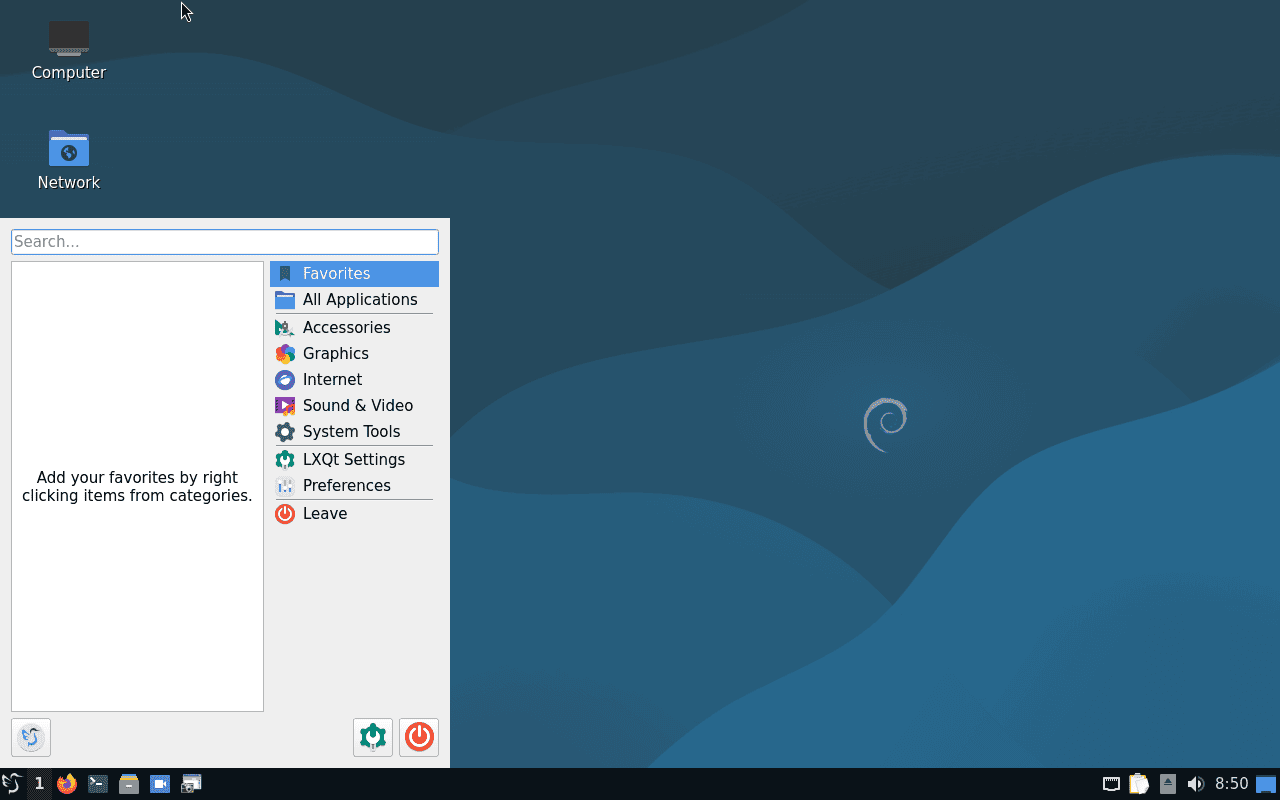
- Provides an LXQt edition running on Wayland.
- Distributed as live ISO images which can be tried without installation.
- Includes a custom open source installer for installing the system to disk.
- The LXQt image includes a graphical installer with Polish and English language support.
- Uses Debian’s package repositories rather than maintaining separate LajtLinux repositories.
- Designed to keep resource consumption low while retaining a usable graphical environment.
- Some window manager editions dispense with a graphical login manager to keep the system lean.
- The startw command starts the graphical session on editions without a graphical login manager.
- Stable images are available based on Debian 13.
- Testing editions provide access to newer Debian packages.
- Includes configurations prepared by the LajtLinux developer rather than relying solely on upstream defaults.
- Developed as a hobby project without a fixed release schedule.
- Images are provided for 64-bit PCs.
| Working state: | Active |
| Desktop: | LXQt, Labwc, Sway, River, Niri, MangoWC, Wayfire, dwl, Lomiri |
| Init Software: | systemd |
| Package Management: | APT |
| Release Model: | Semi-rolling |
| Platforms: | x86_64 |
| Home Page: | sourceforge.net/projects/lajtlinux |
| Developer: | lajtlinux |
| This article is part of our Big List of Active Linux Distributions and Open Source Operating Systems. |
What's a Linux distribution ("distro")? |
| A distro provides the user with a desktop environment, preloaded applications, and ways to update and maintain the system. Each distro makes different choices, deciding which open source projects to install and provides custom written programs. They can have different philosophies. Some distros are intended for desktop computers, some for servers without a graphical interface, and others for special uses. Because Linux is an open source operating system, combinations of software vary between Linux distros. |
Please read our Comment Policy before commenting.