

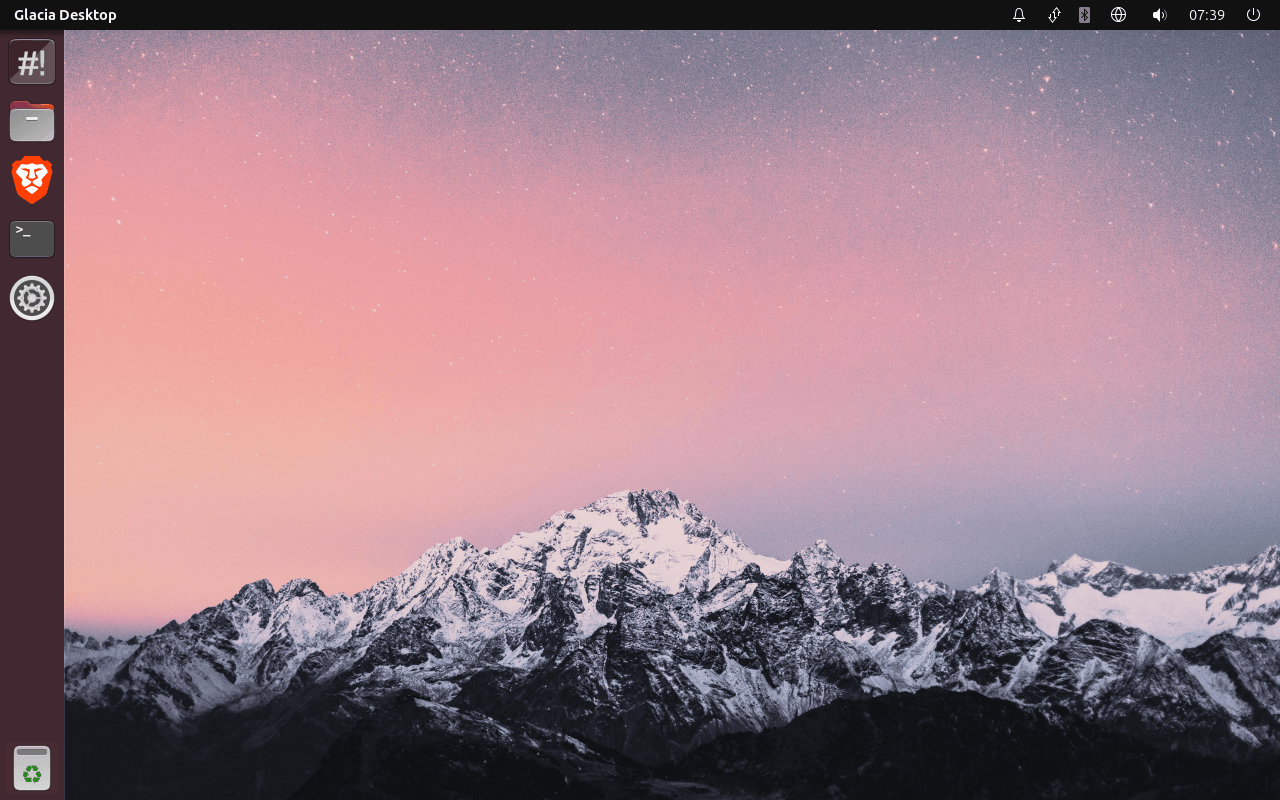
Glacia OS is an Ubuntu-based Linux distribution that builds its installation image from an Ubuntu base and layers a customized Unity desktop with Nemo, LightDM, the Ubiquity installer, and a growing collection of Glacia-developed components.
The project is aimed at developers, creators, and everyday users who want a polished desktop with curated defaults, and its public GitLab hosts the ISO builder alongside custom tools such as Iceberg Control Center, desktop indicators, themes, and file sharing utilities.
Key Features
- Builds a ready-to-install desktop system with a customized Unity session, Nemo file manager, LightDM, and the Ubiquity graphical installer.
- Includes a developer-first file manager with an “Open in Editor” action for quickly opening project folders in supported editors.
- Uses an application launcher focused on installed software only, with local search that avoids web results and keeps queries on the device.
- Provides a unified settings experience through Iceberg Control Center and related Glacia utilities for desktop, system, and hardware configuration.
- Offers Glacia’s file-share utility for SSH and Bluetooth transfers, including Nemo integration for right-click sharing from the file manager.
- Develops in public on GitLab, with source code, issue tracking, CI/CD pipelines, and an ISO Builder repository available for inspection and contribution.
| Working state: | Active |
| Desktop: | Unity |
| Init Software: | systemd |
| Package Management: | APT |
| Release Model: | Fixed |
| Platforms: | x86_64 |
| Home Page: | glaciaos.com |
| Developer: | Glacia OS |
| This article is part of our Big List of Active Linux Distributions and Open Source Operating Systems. |
What's a Linux distribution ("distro")? |
| A distro provides the user with a desktop environment, preloaded applications, and ways to update and maintain the system. Each distro makes different choices, deciding which open source projects to install and provides custom written programs. They can have different philosophies. Some distros are intended for desktop computers, some for servers without a graphical interface, and others for special uses. Because Linux is an open source operating system, combinations of software vary between Linux distros. |
Please read our Comment Policy before commenting.