

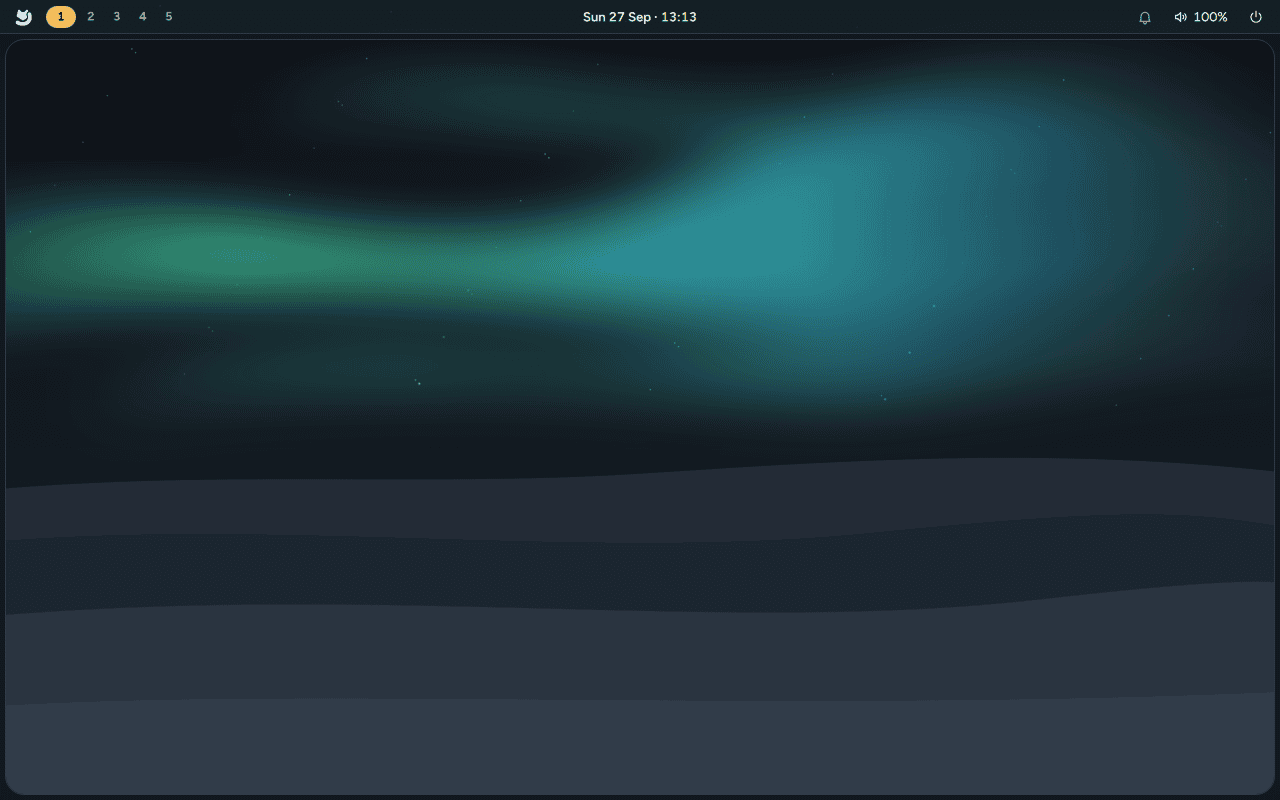
Arctic Linux is a Fedora-based Linux distribution designed around a keyboard-first desktop experience. It uses the Mango tiling Wayland compositor alongside a custom Quickshell interface, combining automatic window management with a cohesive desktop environment inspired by the arctic fox.
The desktop includes a panel, application launcher, wallpaper picker, lock screen, on-screen displays, and a dedicated settings application. The launcher incorporates calculator and command functionality, while the settings interface provides access to display configuration, networking, user accounts, and other system preferences. The desktop’s colours can follow the selected wallpaper, and users can switch between predefined themes using keyboard shortcuts.
Arctic Linux provides a live environment that allows users to try the distribution before installing it. Its graphical installer uses a guided workflow with an application selection interface, downloading only the additional applications selected by the user. New installations use Btrfs with LUKS2 disk encryption by default. The distribution receives Fedora packages through the standard repositories, while its own desktop components and utilities are distributed through a separate signed repository.
| Working state: | Active |
| Desktop: | Mango with Quickshell |
| Init Software: | systemd |
| Package Management: | DNF |
| Release Model: | Fixed |
| Platforms: | x86_64 |
| Home Page: | github.com/yuvalkolodkingal/Arctic-Linux |
| Developer: | Yuval Kolodkin-Gal |
| This article is part of our Big List of Active Linux Distributions and Open Source Operating Systems. |
What's a Linux distribution ("distro")? |
| A distro provides the user with a desktop environment, preloaded applications, and ways to update and maintain the system. Each distro makes different choices, deciding which open source projects to install and provides custom written programs. They can have different philosophies. Some distros are intended for desktop computers, some for servers without a graphical interface, and others for special uses. Because Linux is an open source operating system, combinations of software vary between Linux distros. |
Please read our Comment Policy before commenting.