

Zenclora is a Debian-based desktop Linux distribution designed for stability, daily use, gaming, and productivity.
It offers customized GNOME and MATE editions, an optimized system base, and its own Zen Package Manager to simplify software installation, system maintenance, driver setup, and access to common utilities from the terminal.
Key Features
- Based on Debian Stable with a focus on reliability and security updates.
- Comes in two distinct desktop flavors to suit your workflow and hardware preferences – customized GNOME and MATE desktop editions.
- Includes ZPM, a command-line package and system manager for installing popular software and managing system tasks.
- Provides Zenthub, a CLI-based Flatpak store built with a Python Rich interface.
- Includes system utilities for DNS configuration, ZRAM setup, service management, log viewing, APT repair, network reset, and system optimization.
- Offers gaming-related software through ZPM, including Steam, Lutris, Wine, MangoHud, and GameMode.
- Provides NVIDIA driver installation through a single ZPM command.
- Includes security utilities for Firejail sandboxes, USBGuard, checksum verification, and an NFTables-based firewall.
- Provides tools for formatting USB drives, installing local .deb packages, managing files, and changing system settings.
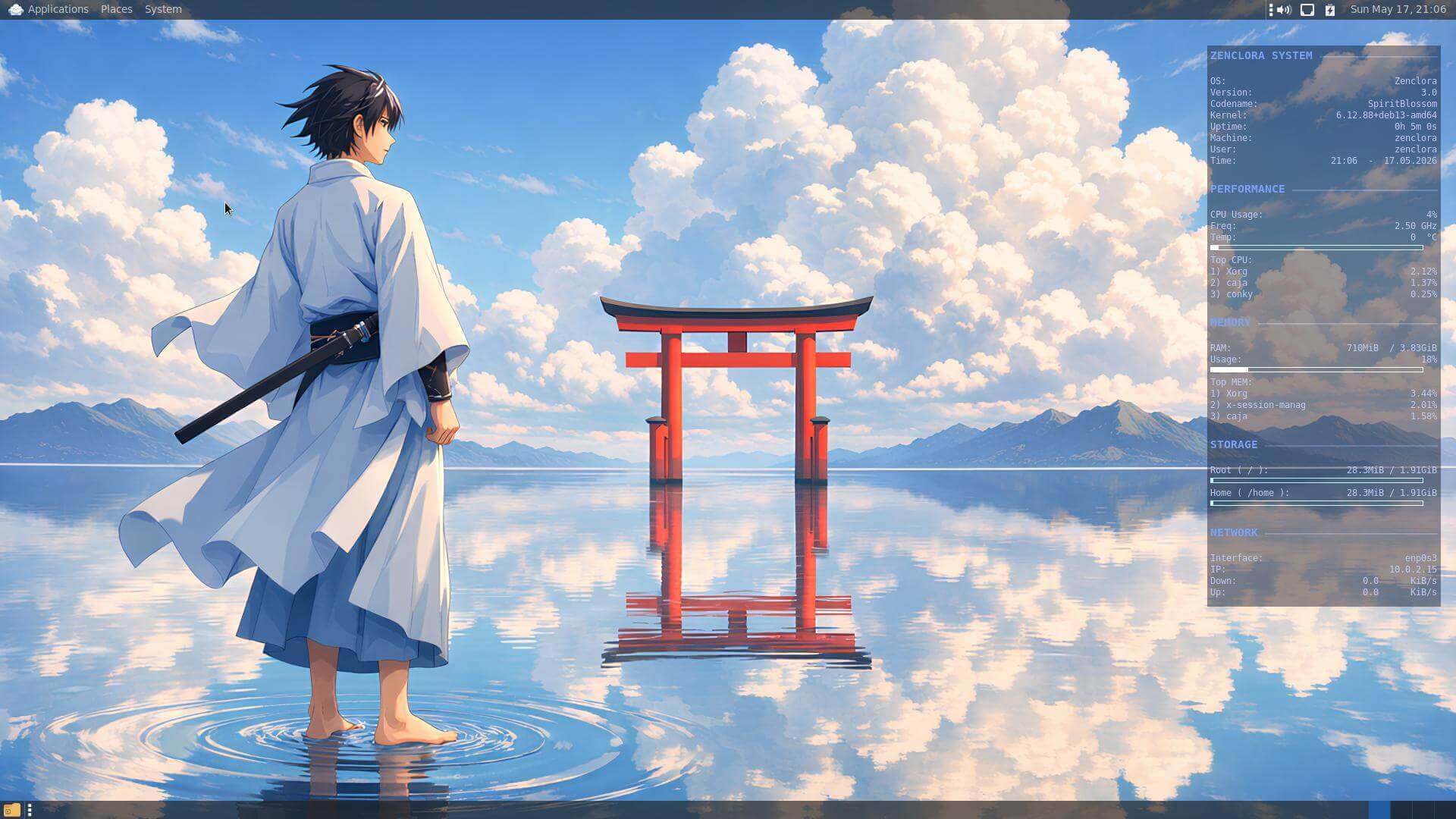
| Working state: | Active |
| Desktop: | GNOME, MATE |
| Init Software: | systemd |
| Package Management: | APT |
| Release Model: | Fixed |
| Platforms: | x86_64 |
| Home Page: | nixovena.org/zenclora |
| Developer: | Zenclora Linux Project |
| This article is part of our Big List of Active Linux Distributions and Open Source Operating Systems. |
What's a Linux distribution ("distro")? |
| A distro provides the user with a desktop environment, preloaded applications, and ways to update and maintain the system. Each distro makes different choices, deciding which open source projects to install and provides custom written programs. They can have different philosophies. Some distros are intended for desktop computers, some for servers without a graphical interface, and others for special uses. Because Linux is an open source operating system, combinations of software vary between Linux distros. |
Please read our Comment Policy before commenting.