

EnderOS is an Arch Linux-based live distribution designed to provide a portable, disposable computing environment. It runs from removable media such as a USB flash drive or external SSD, allowing users to work without installing a conventional operating system.
The distribution does not retain files or session data by default. Changes made during a live session are discarded when the system shuts down or restarts. Users who want to preserve documents or other work must save them to external storage, cloud services or a network-attached storage device.
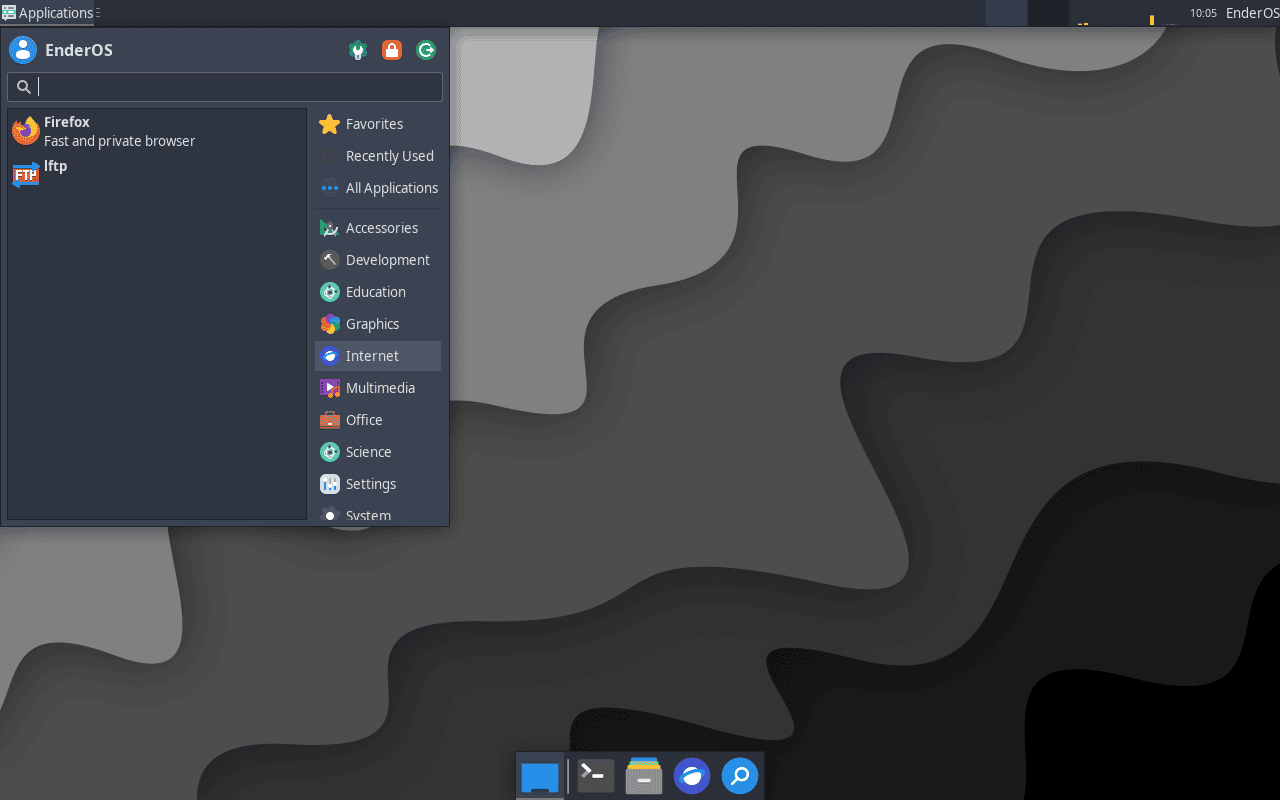
EnderOS uses the Xfce desktop environment with a traditional graphical interface. It is intended for general-purpose computing, with applications for web browsing, office work, programming, multimedia editing and note-taking.
The distribution also uses a real-time Linux kernel, making it potentially useful for workloads where predictable scheduling latency is important. The project provides source files for building customised live images using Archiso.
| Working state: | Active |
| Desktop: | Xfce |
| Init Software: | systemd |
| Package Management: | Pacman |
| Release Model: | - |
| Platforms: | x86_64 |
| Home Page: | sourceforge.net/projects/enderos/ |
| Developer: | Enderman1951 |
| This article is part of our Big List of Active Linux Distributions and Open Source Operating Systems. |
What's a Linux distribution ("distro")? |
| A distro provides the user with a desktop environment, preloaded applications, and ways to update and maintain the system. Each distro makes different choices, deciding which open source projects to install and provides custom written programs. They can have different philosophies. Some distros are intended for desktop computers, some for servers without a graphical interface, and others for special uses. Because Linux is an open source operating system, combinations of software vary between Linux distros. |
Please read our Comment Policy before commenting.