

Nebula Linux is an Arch-based rolling release Linux distribution built around DankMaterialShell and the niri scrollable-tiling Wayland compositor.
The distribution offers a heavily themed Material 3 desktop. Matugen generates a colour scheme from the selected wallpaper and applies it across the shell, lock screen, terminals, and GTK and Qt applications. Nebula also provides a branded Calamares installer, a welcome application, and its own command-line utility for system maintenance and recovery.
Key Features
- Automatically generates a Material 3 colour scheme from the selected wallpaper.
- Offers scrollable tiling and conventional floating window modes.
- Installs to Btrfs with automatic Snapper snapshots before and after updates.
- Allows earlier snapshots to be booted from the GRUB menu.
- Provides a branded Calamares graphical system installer.
- Includes Nebula Welcome for onboarding, application bundles, and enabling Flathub.
- Offers the
nebulacommand-line utility for updates, rollback, drivers, diagnostics, wallpapers, and other system tasks. - Uses PipeWire with WirePlumber for audio and NetworkManager for network management.
- Includes Firefox, LibreOffice, Nautilus, Celluloid, Loupe, Evince, and other desktop applications.
- Provides guest tools for QEMU/KVM, VirtualBox, and VMware.
- Requires a UEFI system; legacy BIOS boot is not supported.
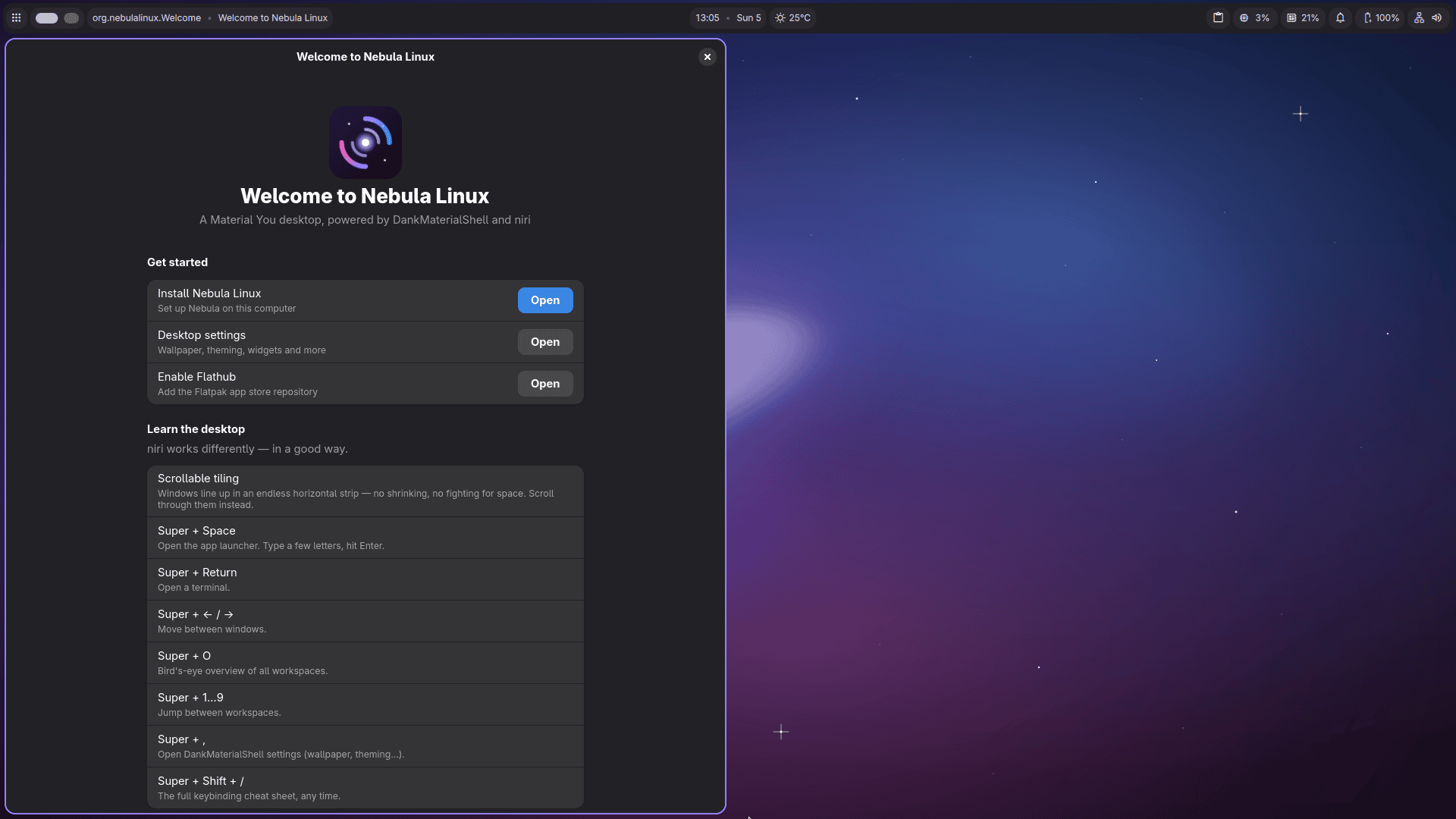
| Working state: | Active |
| Desktop: | DankMaterialShell |
| Init Software: | systemd |
| Package Management: | Pacman |
| Release Model: | Rolling |
| Platforms: | x86_64 |
| Home Page: | nebula-linux-os.github.io/Nebula-Linux |
| Developer: | Ashish Kumar |
| This article is part of our Big List of Active Linux Distributions and Open Source Operating Systems. |
What's a Linux distribution ("distro")? |
| A distro provides the user with a desktop environment, preloaded applications, and ways to update and maintain the system. Each distro makes different choices, deciding which open source projects to install and provides custom written programs. They can have different philosophies. Some distros are intended for desktop computers, some for servers without a graphical interface, and others for special uses. Because Linux is an open source operating system, combinations of software vary between Linux distros. |
Please read our Comment Policy before commenting.