
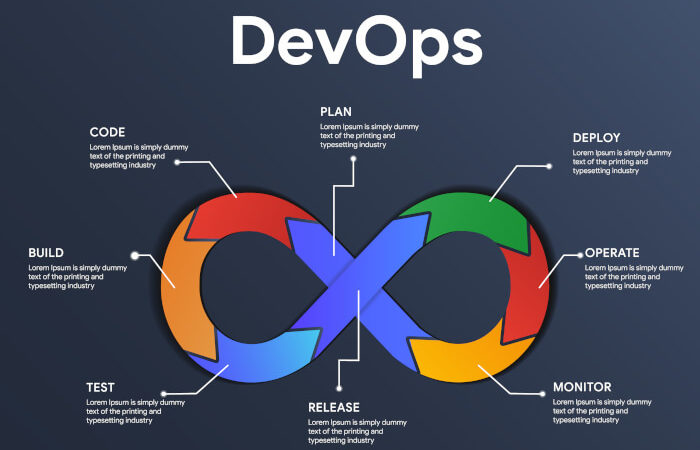
Spinnaker is a multi-cloud continuous delivery platform for releasing software changes with high velocity and confidence.
It combines a powerful and flexible pipeline management system with integrations to the major cloud providers. Spinnaker consists of a number of independent microservices, with the Halyard CLI tool or the Kubernetes Operator (Beta) managing the lifecycle of the other services.
This is free and open source software.
Key Features
- Automated releases – create deployment pipelines that run integration and system tests, spin up and down server groups, and monitor your rollouts. Trigger pipelines via git events, Jenkins, Travis CI, Docker, CRON, or other Spinnaker pipelines.
- Built-in deployment best practices – create and deploy immutable images for faster rollouts, easier rollbacks, and the elimination of hard to debug configuration drift issues. Leverage an immutable infrastructure in the cloud with built-in deployment strategies such as red/black and canary deployments.
- Multi-cloud – deploy across multiple cloud providers including AWS EC2, Kubernetes, Google Compute Engine, Google Kubernetes Engine, Google App Engine, Microsoft Azure, Openstack, Cloud Foundry, and Oracle Cloud Infrastructure, with DC/OS coming soon.
- Role-based Access Control – restrict access to projects or accounts by hooking into your internal authentication system using OAuth, SAML, LDAP, X.509 certs, Google Groups, Azure Groups, or GitHub Teams.
- Chaos Monkey Integration – test that your application can survive instance failures by terminating them on purpose.
- CI Integrations – listen to events, collect artifacts, and trigger pipelines from Jenkins or Travis CI. Triggers via git, cron, or a new image in a docker registry are also supported.
- CLI for Setup and Admin – install, configure, and update your Spinnaker instance with halyard, Spinnaker’s CLI tool.
- Deployment Strategies – configure pipelines with built-in deployment strategies such as highlander and red/black, with rolling red/black and canary in active development, or define your own custom strategy.
- Restricted Execution Windows – restrict the execution of stages to certain windows of time, making sure deployments happen during off-peak traffic or when the right people are on hand to monitor the roll-out.
- Manual Judgments – require a manual approval prior to releasing an update with a manual judgement stage.
- Monitoring Integrations – tie your releases to monitoring services Datadog, Prometheus, Stackdriver, SignalFx, or New Relic using their metrics for canary analysis.
- Notifications – set up event notifications for email, Slack, HipChat, or SMS (via Twilio).
- VM Bakery – bake immutable VM images via Packer, which comes packaged with Spinnaker and offers support for Chef and Puppet templates.
Website: spinnaker.io
Support: GitHub Code Repository
Developer: Netflix
License: Apache License 2.0
Related Software
| Continuous Delivery Tools | |
|---|---|
| Jenkins | Self-contained, open source automation server with a huge array of plugins |
| Argo CD | Declarative GitOps continuous delivery tool |
| Tekton | Powerful and flexible framework for creating CI/CD systems |
| Earthly | CI/CD framework that runs every pipeline inside containers |
| Dagger | Powerful, programmable CI/CD engine |
| GoCD | Easily model and visualize complex workflows |
| Spinnaker | Cloud native continuous delivery |
| Concourse | Presents a general approach to automation for CI/CD |
| Flux | Continuous delivery and GitOps toolkit for Kubernetes |
| Woodpecker | Uses docker containers to execute pipeline steps |
| Agola | CI/CD redefined |
| Screwdriver | Build platform designed for Continuous Delivery |
| PipeCD | GitOps-style continuous delivery platform |
Read our verdict in the software roundup.
 Explore our carefully curated directory of recommended free and open source software, covering every major software category. Explore our carefully curated directory of recommended free and open source software, covering every major software category.The directory forms part of our extensive collection of articles for Linux enthusiasts. It includes hundreds of detailed reviews, together with free and open source alternatives to proprietary software from companies such as Google, Microsoft, Apple, Adobe, IBM, Cisco, Oracle, and Autodesk. LinuxLinks also covers interesting projects worth exploring, Linux-compatible hardware, free programming books and tutorials, and much more. Know a useful free and open source Linux application that we haven’t covered? Tell us about it using our submission form. |
Please read our Comment Policy before commenting.