

Cute DBC Editor is a graphical application for inspecting and editing CAN DBC database files. DBC files are commonly used in automotive and embedded systems development to describe the structure of CAN bus communication, including messages, signals, and node relationships. The application provides a visual interface that allows engineers to explore and modify these files without manually editing the underlying text format.
The software is intended for developers and engineers working with CAN networks who need a convenient way to browse and understand DBC structures. It enables users to view messages and signals, examine their properties, and edit database elements through an interactive interface. This makes it easier to analyse CAN communication definitions and maintain DBC databases used in vehicle and embedded system development.
It’s built with Python, PyQt6, and cantools.
This is free and open source software.
Key Features
- Hierarchical Tree View: Easily navigate through CAN messages and their underlying signals.
- Property Editor: Click on any message or signal to view and edit its properties (Frame ID, Length, Start Bit, Byte Order, etc.).
- Visual Bit Grid: A real-time grid mapping of bytes and bits to visualize where signals are placed within a message. Features color-coding and automatic cell merging.
- Overlap Detection: Built-in validation to prevent saving if signals overlap or exceed the message length.
- Custom Frameless UI: A fully custom, pixel-art inspired interface with a draggable title bar and resize grip.
Website: gitlab.com/livcl/dbc-viewer
Support:
Developer: livcl
License: GNU Affero General Public License v3.0
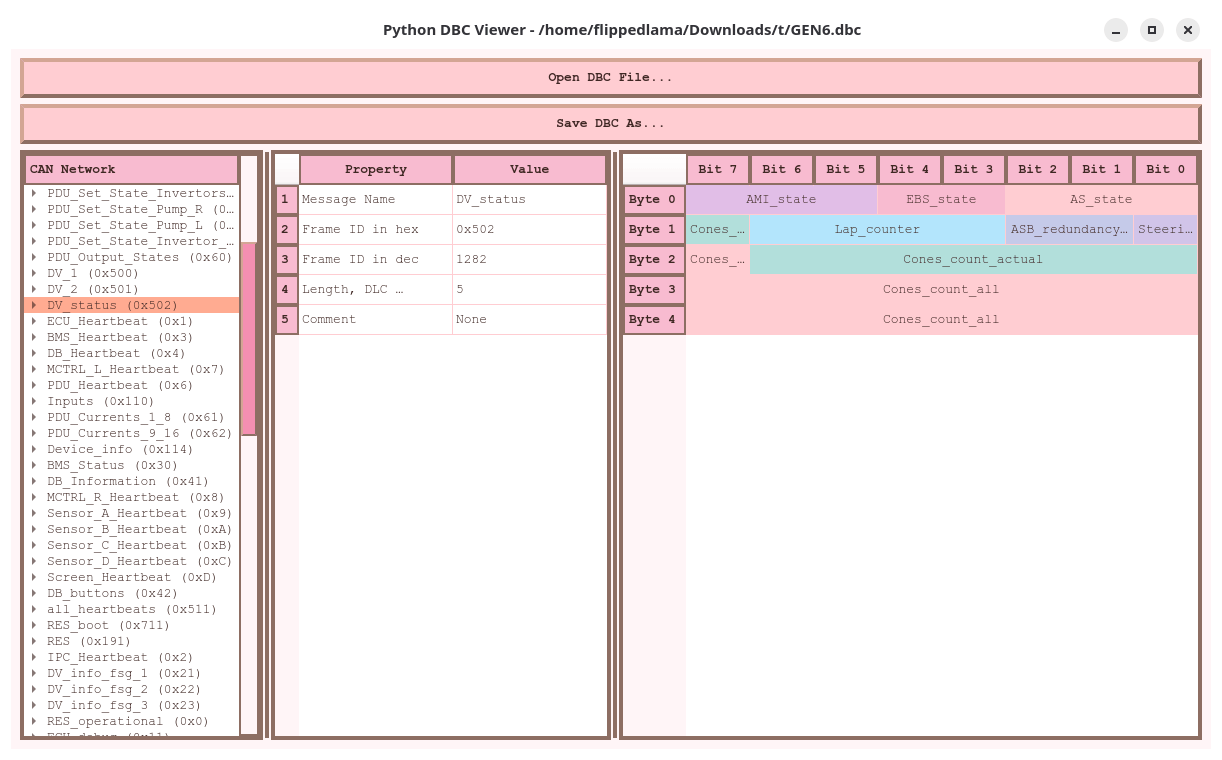
Cute DBC Editor is written in Python. Learn Python with our recommended free books and free tutorials.
 Explore our comprehensive directory of recommended free and open source software. Our carefully curated collection spans every major software category. Explore our comprehensive directory of recommended free and open source software. Our carefully curated collection spans every major software category.This directory is part of our ongoing series of informative articles for Linux enthusiasts. It features hundreds of detailed reviews, along with open source alternatives to proprietary solutions from major corporations such as Google, Microsoft, Apple, Adobe, IBM, Cisco, Oracle, and Autodesk. You’ll also find interesting projects to try, hardware coverage, free programming books and tutorials, and much more. Know a useful open source Linux program that we haven’t covered yet? Let us know by completing this form. |