

In the fields of molecular biology and genetics, a genome is the genetic material of an organism. It consists of DNA (or RNA in RNA viruses). Each genome contains all of the information needed to build and maintain that organism. In humans, a copy of the entire genome—more than 3 billion DNA base pairs—is contained in all cells that have a nucleus.
In bioinformatics, a genome browser is a graphical interface for display of information from a biological database for genomic data. They are important tools for studying genomes given the vast amounts of data available. They typically load very large files, such as whole genome FASTA files and display them in a way that users can make sense of the information there. They can be used to visualize a variety of different data types.
Genome browsers enable researchers to visualize and browse entire genomes with annotated data including gene prediction and structure, proteins, expression, regulation, variation, comparative analysis, etc. They use a visual, high-level overview of complex data in a form that can be grasped at a glance and provide the means to explore the data in increasing resolution from megabase scales down to the level of individual elements of the DNA sequence.
There are numerous tools to browse genomes. While there’s considerable overlap in functionality, each software offers unique features or data. Most genome browsers don’t require any programming knowledge.
Here are our recommendations summarized in the chart below. This article focuses solely on standalone desktop genome browsers. Many of them use Java and so are cross-platform tools.
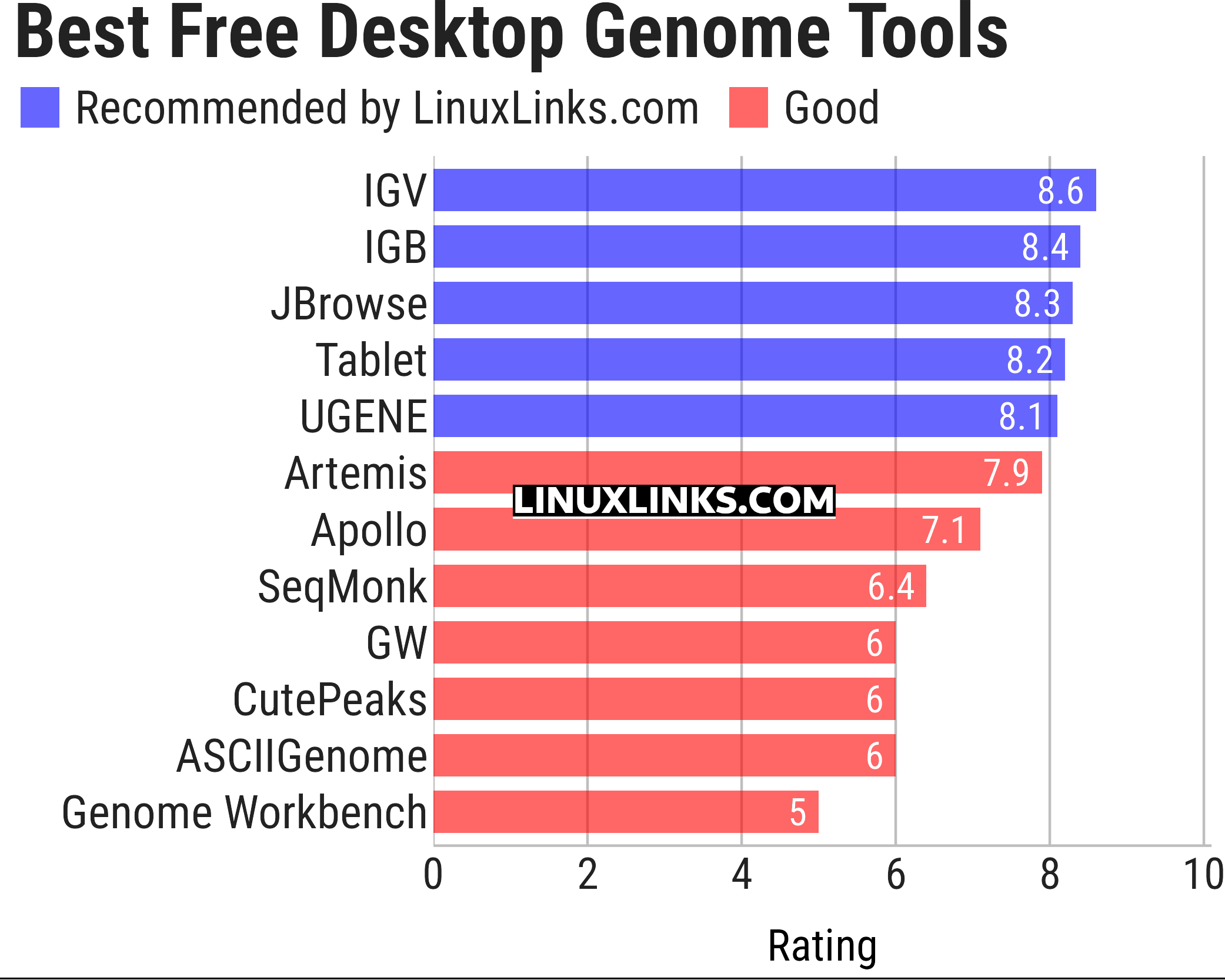
For more details about each application, we’ve compiled dedicated pages below detailing their features, a screenshot, and links to useful resources.
| Desktop Genome Browsers | |
|---|---|
| IGV | High-performance visualization genome browser tool |
| IGB | Integrated Genome Browser |
| JBrowse | Fast, scalable genome browser |
| Tablet | Graphical viewer for sequence assemblies and alignments |
| UGENE | Set of integrated bioinformatics software |
| Artemis | Genome viewer and annotation tool |
| Apollo | Instantaneous, collaborative genomic annotation editor |
| SeqMonk | Visualise and analyse high throughput mapped sequence data |
| GW | Fast browser for genomic sequencing data |
| CutePeaks | Cross platform Sanger Trace file viewer |
| ASCIIGenome | Text only genome browser |
| Genome Workbench | Integrated tools for studying and analyzing genetic data |
Note: This Group Test has excluded web based genome browsers. These are covered separately in this roundup.
This article has been updated to reflect the changes outlined in our recent announcement.
 Explore our carefully curated directory of recommended free and open source software, covering every major software category. Explore our carefully curated directory of recommended free and open source software, covering every major software category.The directory forms part of our extensive collection of articles for Linux enthusiasts. It includes hundreds of detailed reviews, together with free and open source alternatives to proprietary software from companies such as Google, Microsoft, Apple, Adobe, IBM, Cisco, Oracle, and Autodesk. LinuxLinks also covers interesting projects worth exploring, Linux-compatible hardware, free programming books and tutorials, and much more. Know a useful free and open source Linux application that we haven’t covered? Tell us about it using our submission form. |
Please read our Comment Policy before commenting.