
April 2022 updates to the largest compilation of recommended free and open source software available for Linux.
Read more
April 2022 updates to the largest compilation of recommended free and open source software available for Linux.
Read more
termusic is a music player written in Rust. Here’s our review of this open source software.
Read more
JDeveloper covers the full development lifecycle from design through coding, debugging, optimization and profiling to deploying. We recommend open source alternatives.
Read more
Instant messaging (IM) is a form of real-time communication between two or more individuals based on typed text.
Read more
Rembg is a tool to remove the backgrounds from images. It’s written in Python and published under an open source license.
Read more
There are thousands of Linux commands so it’s impractical to provide a comprehensive list. Instead we focus on many of the commands you will need.
Read more
Tinkercad is online browser-based 3D modeling software. It uses a simplified constructive solid geometry method of constructing models. We recommend the best free and open source alternatives.
Read more
Oracle Business Process Management, a member of the Oracle Business Process Management Suite, is a complete set of tools for creating, executing, and optimizing business processes. We recommend the best free and open source alternatives.
Read more
daedalOS takes a different approach to the traditional desktop environment such as GNOME and KDE. The aim of the daedalOS project is to make a web-based desktop environment that’s suitable for everyday use.
Read more
We recommend the best free and open source alternatives to Atlassian Sourcetree, a Git client that simplifies how you interact with your Git repositories.
Read more
Pony is an actor-model, capabilities-secure, high-performance programming language. It’s object-oriented because it has classes and objects.
Read more
MySQL is a database management system. While MySQL is open source, there are other great open source alternatives.
Read more
SAS Enterprise Miner aims to streamline the data mining process. We recommend the best free and open source alternatives.
Read more
While Google Meet is free to use, it’s proprietary software. We recommend the best free and open source alternatives.
Read more
CorelCAD is a computer-aided design application for 2D and 3D design. What are the best free and open source alternatives?
Read more
Shazam is a great service for anyone who listens to music. But it’s proprietary freeware and unavailable for Linux. We recommend the best free and open source alternatives?
Read more
Adobe Acrobat Reader is a proprietary PDF reader. We recommend the best free and open source alternatives.
Read more
Arnold is software for rendering 3D computer-generated scenes using unbiased, physically-based, Monte Carlo path tracing techniques. We recommend the best free and open source alternatives.
Read more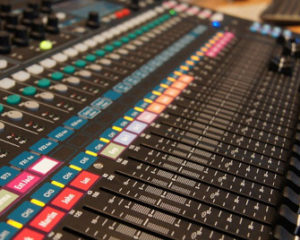
Logic Pro is a digital audio workstation and MIDI sequencer software. What are the best free and open source alternatives?
Read more
Add additional functionality to a GNOME desktop with these great GNOME extensions. This roundup showcases 36 excellent GNOME extensions.
Read more