
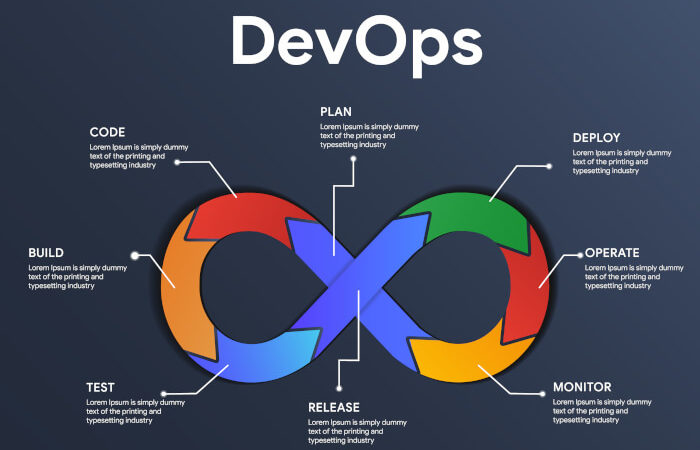
Gradle is a build automation tool focused on flexibility and performance.
Gradle offers a flexible model that can support the entire development lifecycle from compiling and packaging code to publishing web sites. Gradle has been designed to support build automation across multiple languages and platforms including Java, Scala, Android, Kotlin, C/C++, and Groovy, and is closely integrated with development tools and continuous integration servers including Eclipse, IntelliJ, and Jenkins. Gradle build scripts are written using a Groovy or Kotlin DSL.
This is free and open source software.
Key Features
- High performance – only runs tasks that need to run because their inputs or outputs have changed.
- JVM foundation – runs on the JVM and you must have a Java Development Kit (JDK) installed to use it.
- Conventions – makes common types of projects — such as Java projects — easy to build by implementing conventions.
- Extensibility – extend Gradle to provide your own task types or even build model.
- IDE support – import Gradle builds and interact with them: Android Studio, IntelliJ IDEA, Eclipse, and NetBeans. Gradle also has support for generating the solution files required to load a project into Visual Studio.
- Insight – build scans provide extensive information about a build run that you can use to identify build issues.
- Incremental builds.
- Build caching.
- Incremental subtasks.
- Incremental annotation processing.
- Compiler daemon.
- Parallel execution.
- Parallel download of dependencies.
- Task timeouts.
- Web-based build visualization.
- Collaborative debugging.
- Extend and customise.
- Continuous build.
- Composite builds.
- Task exclusion.
- Dry run.
- Continue execution after failures.
- Fail fast test execution.
- Snyc dependency cache with repository.
Website: gradle.org
Support: GitHub Code Repository
Developer: Hans Dockter, Adam Murdoch, Szczepan Faber, Peter Niederwieser, Luke Daley, Rene Gröschke, Daz DeBoer, and contributors
License: Apache License 2.0
Gradle is written in Groovy and Java. Learn Groovy with our recommended free books and free tutorials. Learn Java with our recommended free books and free tutorials.
Related Software
| Build Systems | |
|---|---|
| Cargo | Rust package manager |
| gulp | Toolkit to automate & enhance your workflow |
| Bazel | Build and test your multi-language, multi-platform projects |
| Apache Maven | Build automation tool used primarily for Java projects |
| Gradle | Build tool with a focus on build automation and support for multi-language |
| Meson | Next-generation build system |
| sbt | Extensible task and dependency tool for Scala projects |
| CMake | Family of tools designed to build, test and package software |
| Buck2 | Encourages the creation of small, reusable modules |
| Leiningen | Automating Clojure projects |
| Grunt | JavaScript Task Runner |
| Ninja | Small build system with a focus on speed |
| Mill | Fast, flexible task runner for JVM-based software projects |
| xmake | Cross-platform build utility based on Lua |
| SCons | Software construction tool |
| Pants | Scalable build system for monorepos |
| PHing | Build system based on Apache Ant |
| Please | Fast cross-language automation for large codebases |
| Rake | make-like build utility for Ruby |
| Apache Ant | Tool for automating software build processes |
| Rebar3 | Feature-rich project and dependency tool for Erlang applications |
| Cabal | Common Architecture for Building Applications and Libraries |
| FASTBuild | High-performance tool with caching and distributed processing |
| Dune | Composable project automation tailored to the OCaml ecosystem |
| build2 | Native cross-platform toolchain for C and C++ projects |
Read our verdict in the software roundup.
 Explore our comprehensive directory of recommended free and open source software. Our carefully curated collection spans every major software category. Explore our comprehensive directory of recommended free and open source software. Our carefully curated collection spans every major software category.This directory is part of our ongoing series of informative articles for Linux enthusiasts. It features hundreds of detailed reviews, along with open source alternatives to proprietary solutions from major corporations such as Google, Microsoft, Apple, Adobe, IBM, Cisco, Oracle, and Autodesk. You’ll also find interesting projects to try, hardware coverage, free programming books and tutorials, and much more. Discovered a useful open source Linux program that we haven’t covered yet? Let us know by completing this form. |
Please read our Comment Policy before commenting.