
Linux is a promising platform for artists, photographers, animators, and designers. With low cost hardware, good free software, and a modicum of natural ability and dedication, anyone can generate professional-looking computer graphics.
The open source community has produced a rich variety of open source graphics tools. There is such a vast array of utilities available to download that it can be very time consuming to separate the wheat from the chaff. The purpose of this article is to identify some of our favorite graphical tools. We cover color management utilities, image processing, graphical converters and optimisers, and workflow applications.
Now, let’s explore the 8 graphics tools at hand. For each title we have compiled its own portal page, a full description with an in-depth analysis of its features, a screenshot of the software in action, together with links to relevant resources and reviews.
| Graphics Tools | |
|---|---|
| LPROF | Hardware Color Profiler |
| UFRaw | Standalone tool to import RAW data from high-end digital cameras |
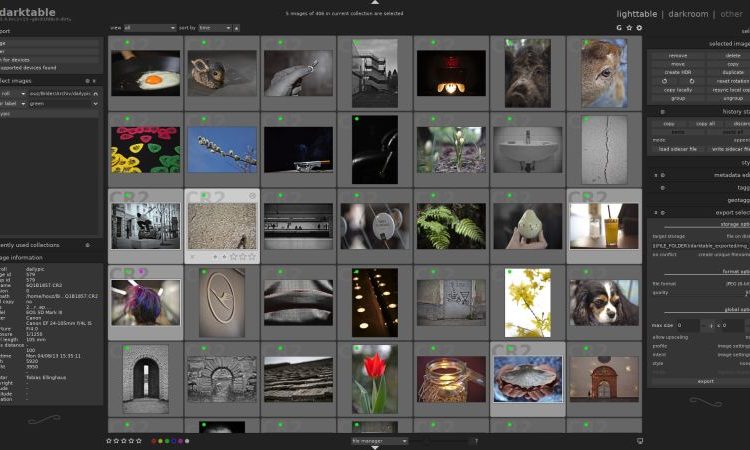
| Darktable | Virtual lighttable and darkroom for photographers |
| UniConvertor | Universal vector graphics translator |
| Trimage | GUI and command-line interface to optimize image files |
| Argyll | Color Management System, calibrator and profiler |
| Converseen | Convert and resize images to any popular formats |
| ImageJ | Image processing program inspired by NIH Image for the Macintosh |
 LinuxLinks helps you discover the best free and open source software for Linux. Explore our extensive collection of recommended applications, including alternatives to popular proprietary software. We also publish software reviews, Linux tutorials, hardware reviews, free programming books and articles covering the wider open source community. Browse our Linux resources to discover more. Know a useful free and open source Linux application we haven't covered? Suggest a program for inclusion. Has your software been featured on LinuxLinks? Display one of our Featured on LinuxLinks badges on your website or GitHub README. |
Please read our Comment Policy before commenting.