

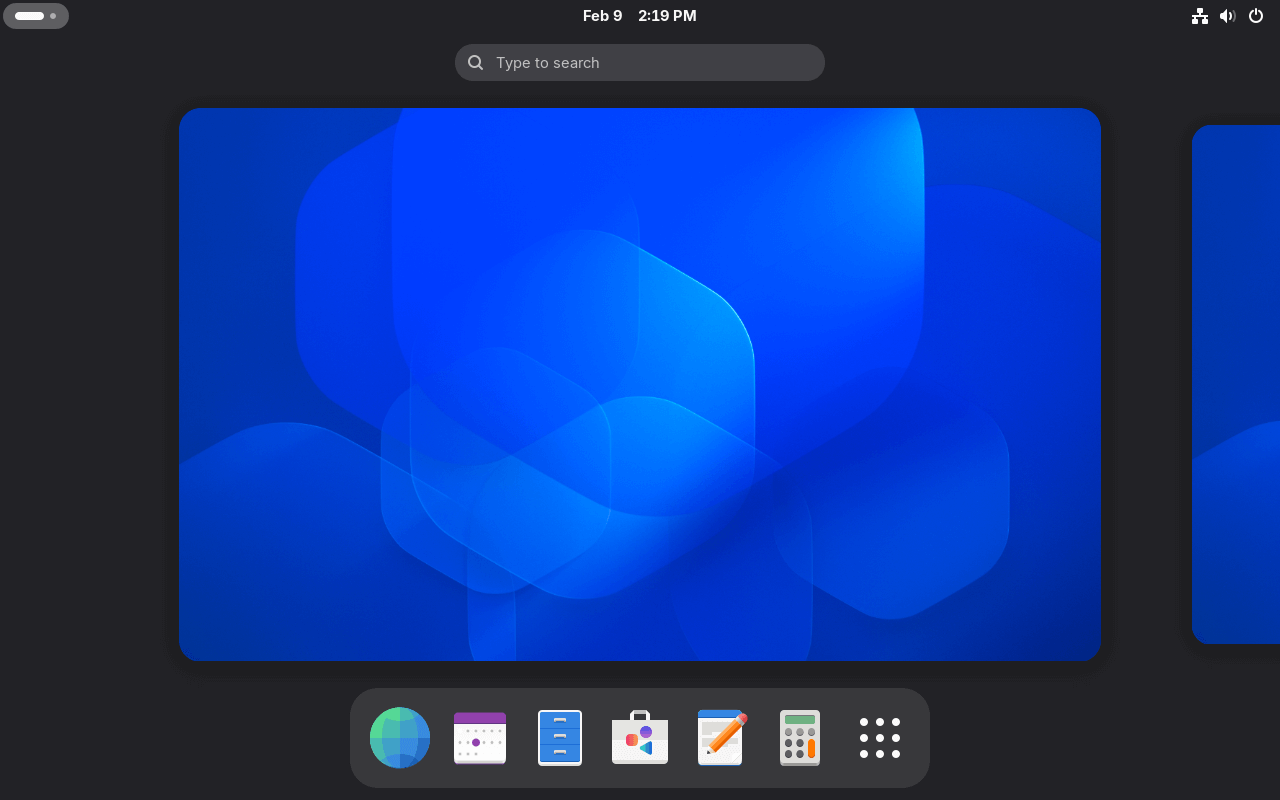
GNOME OS is an experimental, immutable Linux-based operating system designed by the GNOME project specifically for testing, developing, and showcasing the latest, cutting-edge GNOME desktop environment and core applications.
It is not a daily-driver distribution for general users, but rather a tool for QA (Quality Assurance), developers, and journalists to test the latest GNOME nightly builds. It offers a pure “vanilla” experience of the GNOME desktop, ensuring that applications and the shell are tested in their intended, unadulterated state.
| Working state: | Active |
| Desktop: | GNOME |
| Init Software: | systemd |
| Package Management: | Flatpak |
| Release Model: | Rolling |
| Platforms: | x86_64 |
| Home Page: | os.gnome.org |
| Developer: | GNOME Project |
| This article is part of our Big List of Active Linux Distributions. |
What's a Linux distribution ("distro")? |
| A distro provides the user with a desktop environment, preloaded applications, and ways to update and maintain the system. Each distro makes different choices, deciding which open source projects to install and provides custom written programs. They can have different philosophies. Some distros are intended for desktop computers, some for servers without a graphical interface, and others for special uses. Because Linux is an open source operating system, combinations of software vary between Linux distros. |