

Remote Authentication Dial In User Service (RADIUS) is a networking protocol that offers centralized connection authentication, authorization, and accounting management for various types of network access. RADIUS is mature technology having been developed almost twenty years ago.
Traditionally, this type of server was typically deployed by organizations that operate large banks of modems. However, the technology underpins secure network access for network appliances, wireless and virtual private network (VPN) connections. Internet service providers use RADIUS attributes in Digital Subscriber Line (DSL) and cable connections to ensure that users are connected to the correct services, reject connections for expired accounts, IP allocation, and to carry out accounting functionality. Nevertheless, these network authentication servers can be used on any network that needs a centralized authentication and/or accounting service.
To provide an insight into the quality of software that is available, we have compiled a list of 5 network authentication tools. Hopefully, there will be something of interest here for educational institutions, internet service providers, and other commercial organizations. We give our strongest recommendation to Keycloak and FreeRADIUS. Only free and open source software is eligible for inclusion here.
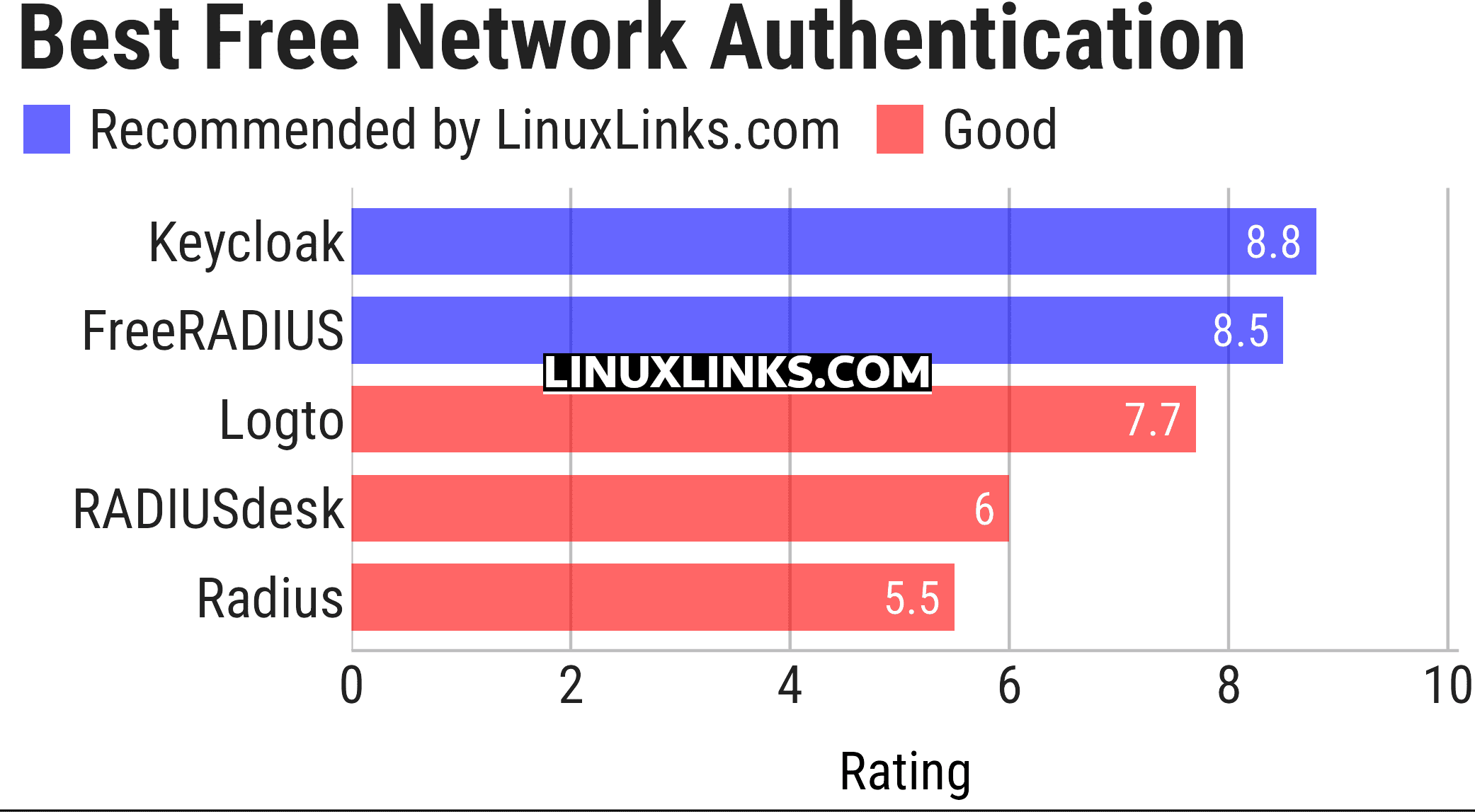
Let’s explore the 5 network authentication tools. Click the links in the table below to learn more about each application.
| Network Authentication Servers | |
|---|---|
| Keycloak | Identity and Access Management solution for modern Applications and Services |
| FreeRADIUS | High-performance and highly configurable RADIUS server |
| Logto | Modern Auth0 alternative |
| RADIUSdesk | RADIUS management platform |
| Radius | Remote user authentication and accounting and accompanying utilities |
This article has been updated to reflect the changes outlined in our recent announcement.
 Explore our comprehensive directory of recommended free and open source software. Our carefully curated collection spans every major software category. Explore our comprehensive directory of recommended free and open source software. Our carefully curated collection spans every major software category.This directory is part of our ongoing series of informative articles for Linux enthusiasts. It features hundreds of detailed reviews, along with open source alternatives to proprietary solutions from major corporations such as Google, Microsoft, Apple, Adobe, IBM, Cisco, Oracle, and Autodesk. You’ll also find interesting projects to try, hardware coverage, free programming books and tutorials, and much more. Know a useful open source Linux program that we haven’t covered yet? Let us know by completing this form. |
Please read our Comment Policy before commenting.