

 Mageia is a Linux-based operating system, distributed as free and open-source software. It was forked from the defunct Mandriva Linux distribution.
This is a community project, supported by a nonprofit organisation of elected contributors.
Mageia offers a very large repository of software, such as productivity applications and a wide number of games
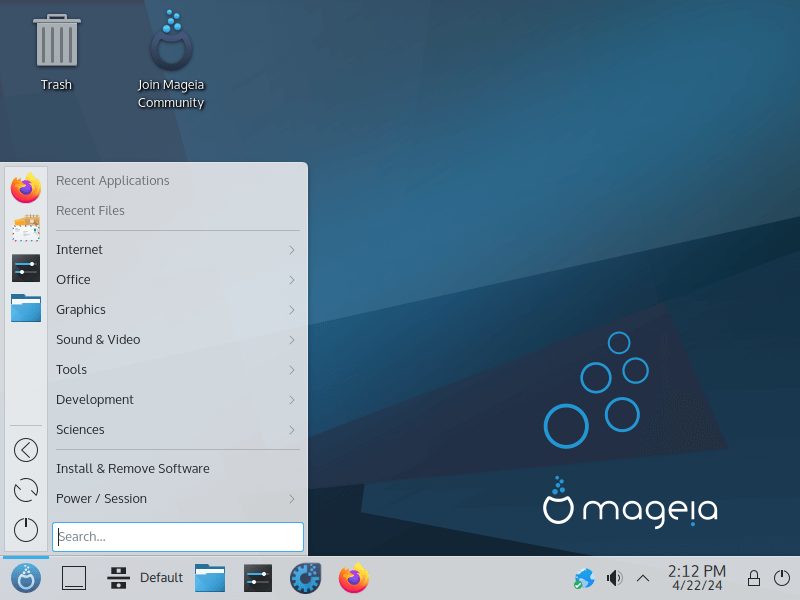
| Working state: | Active |
| Desktop: | GNOME, KDE Plasma, Xfce |
| Init Software: | systemd |
| Package Management: | RPM (URPMI) |
| Release Model: | Fixed, Rolling (Cauldron) |
| Platforms: | aarch64, arm7, i686, x86_64 |
| Home Page: | www.mageia.org |
| Developer: | Mageia.Org |
| This article is part of our Big List of Active Linux Distributions and Open Source Operating Systems. |
What's a Linux distribution ("distro")? |
| A distro provides the user with a desktop environment, preloaded applications, and ways to update and maintain the system. Each distro makes different choices, deciding which open source projects to install and provides custom written programs. They can have different philosophies. Some distros are intended for desktop computers, some for servers without a graphical interface, and others for special uses. Because Linux is an open source operating system, combinations of software vary between Linux distros. |
Please read our Comment Policy before commenting.
Mageia is not a rolling release. It is currently on Mageia 9, with Mageia 10 to be soon released.
As for desktops, MATE and Cinniman are also supported, among others.
It supports i686, no longer supporting i586.
Package management is RPM(URMI). URPMI adds a lot of function to RPM.
Mageia Cauldron (development version) is rolling although the actual releases are best described as fixed.
I don’t just list DEs that are supported. I have amended the other entries.
Thanks for the update.
However, development versions are necessarily rolling. Fedora rawhide is rolling as well, but Fedora is listed as fixed.
As Mageia should be.