

Last Updated on January 26, 2026
It’s no secret that Christmas and the New Year brings a spirit of indulgence, kindness, and, of course, the tradition of list-making. With the year coming to a close, it’s the perfect opportunity to create a reflective list. Once you go through everything outlined below, you’ll be all set to craft those New Year resolutions. Let’s aim to make next year truly different by sticking to them for more than just a week!
We’ve sifted through our statistics to uncover the 10 most popular posts and series that attracted the highest page views this year. This list includes only the stories published within the year.
While many fantastic stories didn’t make this top 10, consider this a glimpse into our highlighted coverage.
10. Survey of Image Upscaling Tools on the ASRock Industrial NUC BOX-255H

The ASRock Industrial NUC BOX-255H has the mobile/embedded class Intel Core 7 255H processor with 16 cores (16 threads). That’s 6 performance-cores, 8-efficient cores, and 2 low power efficient-cores.
My survey of image upscaling tools was a popular article, just sneaking into the top 10. It’s one of many articles I’ve penned on this mini PC.
9. Raspberry Pi 5 Desktop Mini PC
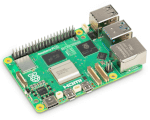 The Raspberry Pi 5 was actually launched back in 2023, but with the community’s help, I was able to review a variety of Raspberry Pi 5 hardware this year. I’ve looked at various models of the Pi 5 as well as starter kits, interesting cases, as well as a variety of software.
Although the Pi 5’s hardware may seem modest when compared to other single-board computers, it stands out to Linux users for its outstanding software support, which is unmatched anywhere else.
8. Alternatives to popular CLI tools
 One of the many strengths of Linux is that there are lots of choices. This series looks at alternatives to popular CLI tools. I published lots of new articles in this series.
Many of the tools are classic commands that have been modernised in some way, such as written in a funky programming language with additional functionality added.
The alternatives are not necessarily drop-in replacements.
7. Minisforum Mini PCs
 I reviewed two high performance mini PC from Minisforum: the AI X1 Pro, as well as the UM890 Pro, both machines feature powerful AMD processors, reliable integrated GPUs, and operate with remarkable quietness.
When I initially assessed the AI X1 Pro with 64GB of RAM, it was priced at £929. However, with the rising costs of RAM and disk storage, its current retail price is now £1,219.00.
The recent surge in RAM prices can be attributed to the skyrocketing demand from the rapidly growing AI sector. This industry requires substantial amounts of memory, including both HBM and DDR types. As a result, manufacturers are shifting their focus away from consumer PCs and smartphones, which has led to a constrained supply. Consequently, this tight supply chain is driving up costs for everyday electronics, causing notable price increases for PC memory kits.
6. BrosTrend networking
 BrosTrend is a shining example of a company that has produced a variety of useful networking hardware with genuine Linux support, unlike the tacit support provided by many other companies.
I reviewed their WiFi adapters and ethernet switches including their 5 Port 2.5GB switch and 8 port 2.5GB switch. Their standout product is the AX3000 WiFi Range Extender & Wi-Fi to Gigabit Ethernet Adapter.
5. Ubuntu Touch
 Ubuntu Touch is a mobile version of the Ubuntu operating system, originally developed by Canonical, but now maintained by the UBports community.
It provides a desktop-like experience on your tablet/phone, complete with multitasking capabilities and a focus on security and privacy. Unlike the usual Android or iOS, Ubuntu Touch is open-source, meaning anyone can view the source code and contribute to its development. Its user interface is written in Qt.
I’m writing a series on the Volla Phone Quintus, a smartphone that runs Ubuntu Touch.
4. RISC-V Single Board Computers

RISC-V (pronounced “risk-five”) is a free, open-standard instruction set architecture (ISA) allowing anyone to design, build, and sell custom processors without royalties, offering flexibility, low power, and customization for everything from tiny IoT devices to supercomputers, unlike proprietary ISAs like x86 (Intel/AMD) and ARM.
I reviewed a variety of RISC-V SBCs including the Orange Pi R2S, Orange Pi RV2, and the Banana Pi BPI-F3.
While these SBCs lack the performance of many ARM based SBCs, I look forward to testing newer RISC-V hardware next year depending on donations received.
3. Best Free and Open Source Software
 One of our main goals for 2025 was to significantly enhance our curated recommendations for open source software. Throughout the year, we’ve refreshed hundreds of articles and added a variety of new ones to our collection. The positive feedback we’ve received has been incredibly encouraging. Thank you!
We recognize that this is an ongoing journey, as open source developers continue to impress us with their innovative new projects every year.
2. Orange Pi Single-Board Computers
 I’ve looked at a range of ARM based SBCs this year, but the stand-out one has to be the Orange Pi 6 Plus. It has a 12 core 64 bit ARMv9 processor with a total computing power of 45 TOPS (CPU/GPU/NPU).
The board is available with either 16GB, 32GB, or 64GB of LPDDR5 RAM and offers a bountiful array of interfaces. I’ve only written a few articles on the Pi 6 Plus but many more are planned for the new year.
1. BOSGAME Mini PCs
 I have reviewed two mini PCs from BOSGAME this year, the M4 Plus and the superb value BOSGAME M6 HX370 AI PC.
I’ve only had the chance to publish 3 articles on the M6 as it was only launched very recently. But many more articles are also planned for the new year. Stay tuned!
Of those, 5. Ubuntu Touch is my favorite. 🙂
It’s the most fun series I’m writing about.
I primarily see linuxlinks as a software site. Love reading about all the programs that exist for the platform. Very surprised that it’s the hardware articles that rose to the top.
Maybe they tend to stand out more – unique in a way.
It’s rumored that LinuxLinks will archive its software roundups.