

This is a new series where I hand-pick an open source Linux application each week that has not previously been covered on LinuxLinks. Each application must meet a very high standard.
Grocy is a web-based, self-hosted groceries and household management system designed to help track food, manage inventory, plan meals, and organise chores within a home environment.
It acts like a lightweight “ERP for your kitchen”, combining stock management, shopping lists, and task scheduling into a single application accessible via a browser or mobile device.
Installation
I evaluated Grocy using Manjaro, an Arch-based Linux distribution. There’s a package in the Arch User Repository for Grocy, installed with Pamac. That’s Manjaro’s GUI package manager.
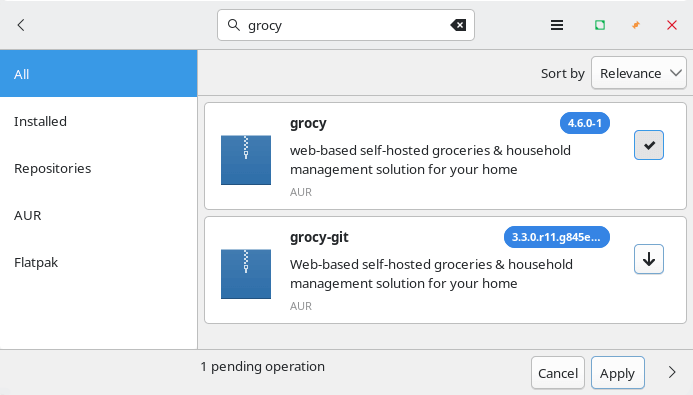
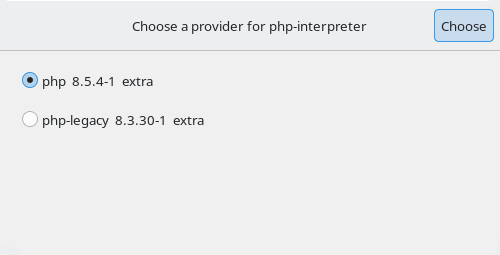
Using the AUR package saves having to mess around manually installing the program’s dependencies. Even on my heavily used test system (which has a ton of software installed), there are quite a few missing dependencies which also need installing.
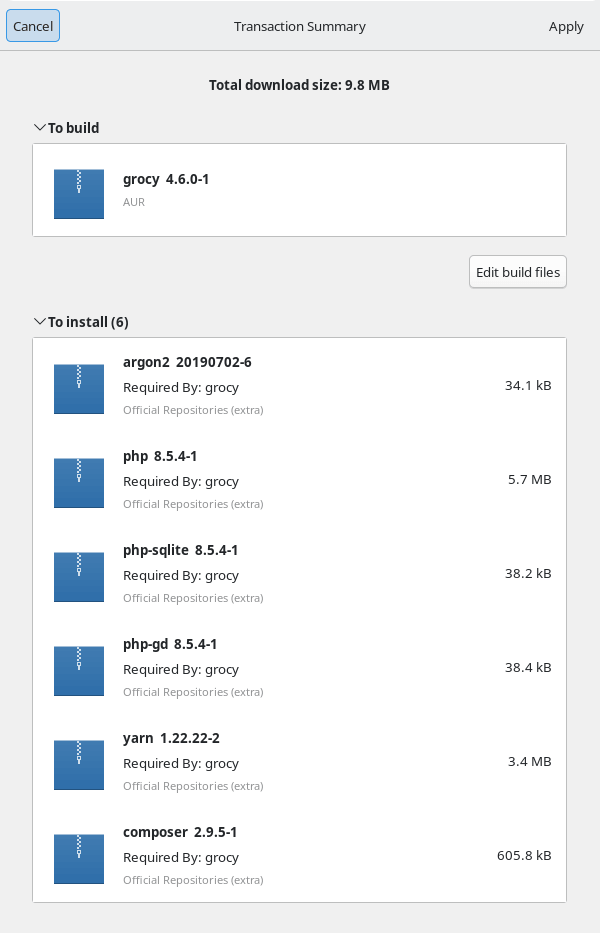
Pamac installed all the dependencies with no issues, and Grocy builds from source with no problems either. That’s not always the case with web-based software.
In Operation
Installing the system might not be as straightforward if you’re not running an Arch-based distro. If so, there’s a good demo of the program available which helps you determine if the program meets your specific needs and requirements.
Here’s an image of the demo.
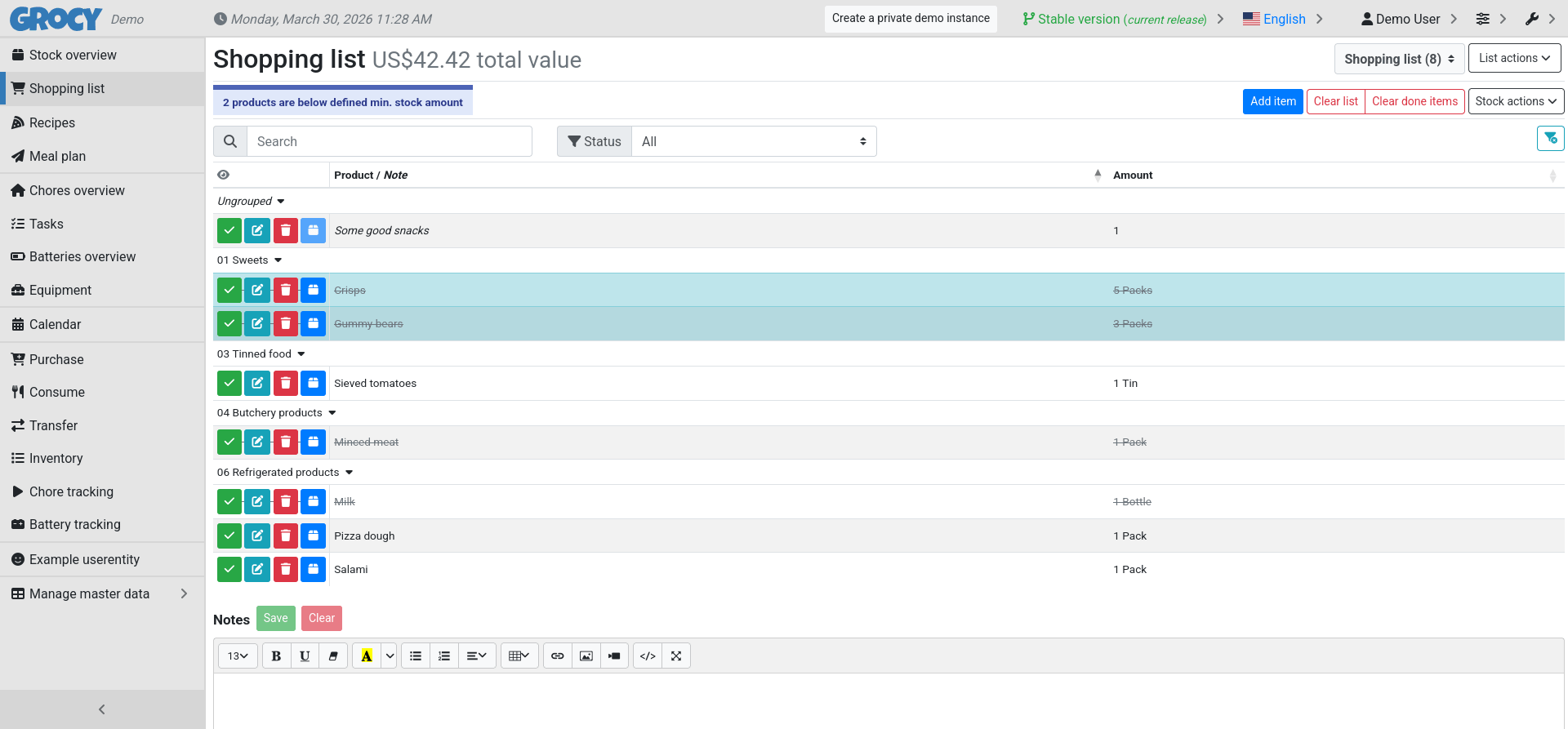
Its key features are extensive. Grocy can track what you’ve in stock, what is due to expire, and what’s fallen below your minimum desired quantity. It supports barcode-oriented workflows, browser-based barcode scanning, recipe management with ingredient availability checks, meal planning, household chores, task tracking, and equipment records such as manuals and maintenance details. It also offers a REST API, feature flags to hide modules you do not need, and custom fields and objects for people who want to stretch it beyond pantry management. On Linux, those strengths are amplified by the fact that deployment choices are flexible.
What Grocy does especially well is productivity. The interface is clearly designed around reducing friction when entering purchases and consuming stock. Once products, barcodes, and locations are set up, day-to-day use can be fast and efficient. The stock and shopping list logic is genuinely useful, especially for households trying to cut food waste or avoid buying duplicates.
The recipe and meal-planning features also stand out because they connect directly to stock levels, which makes Grocy feel more like a practical system than a set of disconnected lists. Linux users who appreciate software that is powerful, scriptable, and under their control will likely enjoy its API, customization options, and self-hosted model.
Summary
Grocy is one of those Linux-friendly projects that makes perfect sense the moment you understand its goal. It is not a conventional desktop grocery list app. Instead, it’s a self-hosted household management system that lets you track food stock, shopping lists, recipes, meal plans, chores, batteries, equipment, and custom data through a web interface.
Overall, Grocy is excellent software for Linux users who enjoy self-hosting and want deep household organization rather than a basic shopping list. It is flexible, feature-rich, and unusually thoughtful in how it connects stock, shopping, recipes, and chores.
Grocy is not lightweight in the conceptual sense. Even if installation is straightforward for an experienced Linux user, the real effort lies in setup and maintenance of data. To get the most from it, you need discipline: creating products, assigning barcodes, entering purchase details, and keeping stock changes up to date. People looking for a simple grocery list will find it overwhelming and should check out the related software featured at bottom of the page.
At the time of writing, Grocy has amassed nearly 9k GitHub stars.
Website: github.com/grocy/grocy
Support:
Developer: Bernd Bestel
License: MIT License
Grocy is written in JavaScript and PHP. Learn JavaScript with our recommended free books and free tutorials. Learn PHP with our recommended free books and free tutorials.
Related Software
| Food and Drink Software | |
|---|---|
| wger | Fitness and nutrition manager |
| Brewtarget | Create and manage beer recipes |
| Recipes | Recipe management application for the GNOME desktop |
| Gourmand | Fork of the Gourmet Recipe Manager |
| CookCLI | Suite of tools to create shopping lists and maintain recipes |
| NUT | Dietary nutrition analysis |
| Table Habit | Establish and track your own micro habit |
| AnyMeal | Cookbook database for storing recipes |
| Gourmet Recipe Manager | Gtk-based recipe organiser and shopping list generator |
| QBrew | Homebrewer's recipe calculator |
| KTeaTime | Timer for steeping tea |
| Krecipes | Recipes manager for KDE |
| JolieBulle | Brewing assistant and beer recipe design |
Read our verdict in the software roundup.
 Explore our comprehensive directory of recommended free and open source software. Our carefully curated collection spans every major software category. Explore our comprehensive directory of recommended free and open source software. Our carefully curated collection spans every major software category.This directory is part of our ongoing series of informative articles for Linux enthusiasts. It features hundreds of detailed reviews, along with open source alternatives to proprietary solutions from major corporations such as Google, Microsoft, Apple, Adobe, IBM, Cisco, Oracle, and Autodesk. You’ll also find interesting projects to try, hardware coverage, free programming books and tutorials, and much more. Discovered a useful open source Linux program that we haven’t covered yet? Let us know by completing this form. |