

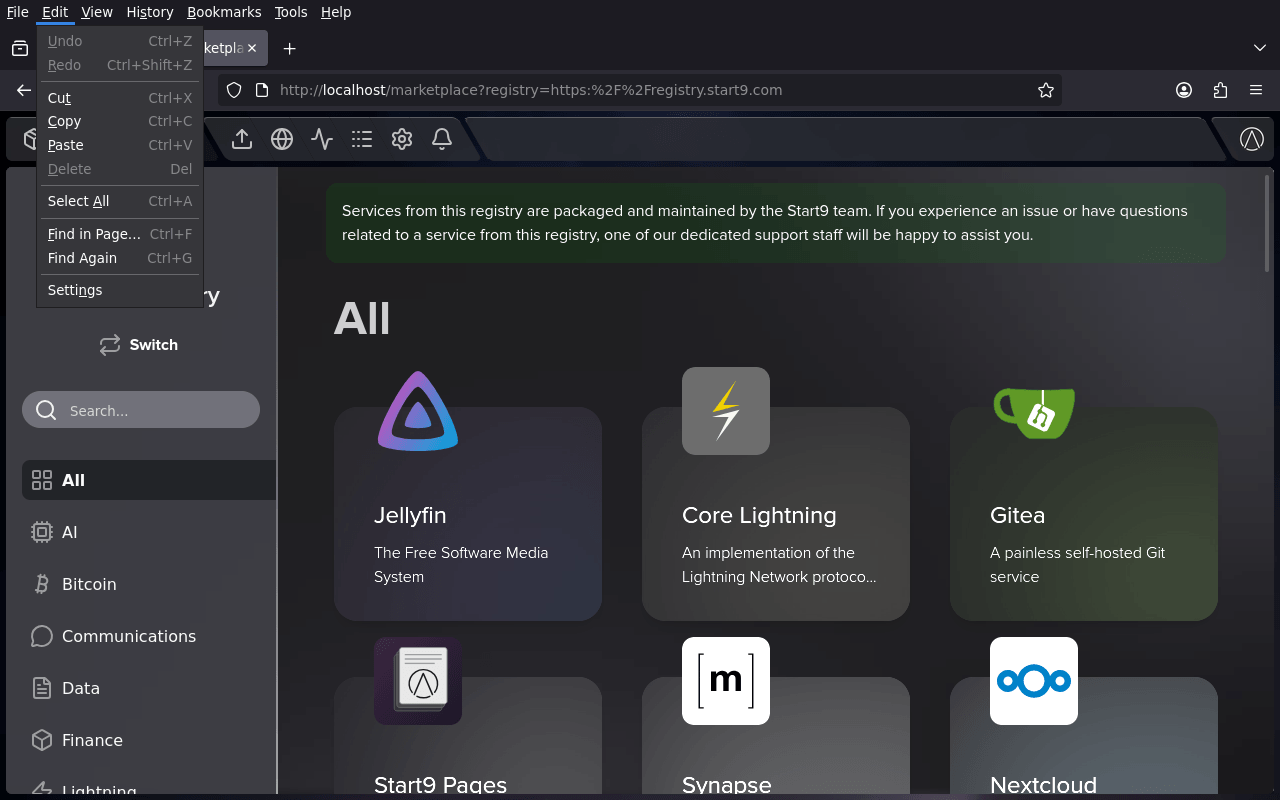
StartOS is a graphical Linux distribution designed to turn a computer into a personal server for self-hosting services.
It provides a web-based environment for deploying and managing applications that would otherwise require more hands-on server administration, and it emphasizes running services on hardware you control rather than relying on third-party cloud platforms.
This is free and open source software.
Key Features
- Handles discovery and installation of self-hosted services.
- Manages network configuration, data backup, dependency handling, and health monitoring.
- Runs services inside isolated LXC containers.
- Uses signed S9PK service packages with cryptographic verification.
- Supports community-packaged software through the Start9 Marketplace ecosystem.
- Can be installed on supported DIY hardware using the project’s installation documentation.
| Working state: | Active |
| Desktop: | Firefox |
| Init Software: | systemd |
| Package Management: | APT |
| Release Model: | Fixed |
| Platforms: | aarch64, armhf, x86_64 |
| Home Page: | github.com/Start9Labs/start-os |
| Developer: | Start9 |
This entry was written with the assistance of a visitor who completed the distro form.
| This article is part of our Big List of Active Linux Distributions. |
What's a Linux distribution ("distro")? |
| A distro provides the user with a desktop environment, preloaded applications, and ways to update and maintain the system. Each distro makes different choices, deciding which open source projects to install and provides custom written programs. They can have different philosophies. Some distros are intended for desktop computers, some for servers without a graphical interface, and others for special uses. Because Linux is an open source operating system, combinations of software vary between Linux distros. |