

RengeOS is a minimal, Arch Linux–based operating system focused on performance, maintainability, and a hackable design. The project aims to provide a lightweight system that retains the flexibility and rolling-release model of Arch Linux while adding its own tooling, configurations, and documentation.
Key Features
- Arch Linux–based distribution using a rolling release model.
- Minimal system design focused on performance and maintainability.
- Hackable architecture intended for users who want to customise and experiment.
- Rollback any time you want – Bcachefs is supported by default, offering efficient CoW and snapshot capabilities for safe and fast system rollback.
- Optimized kernels – built with O3 optimization and performance patches from CachyOS, TKG-Family, and other sources for better performance and efficiency.
- Active development with supporting repositories including kernel patches, helper scripts, and ISO build sources.
- Integration with modern Linux ecosystem tools and utilities.
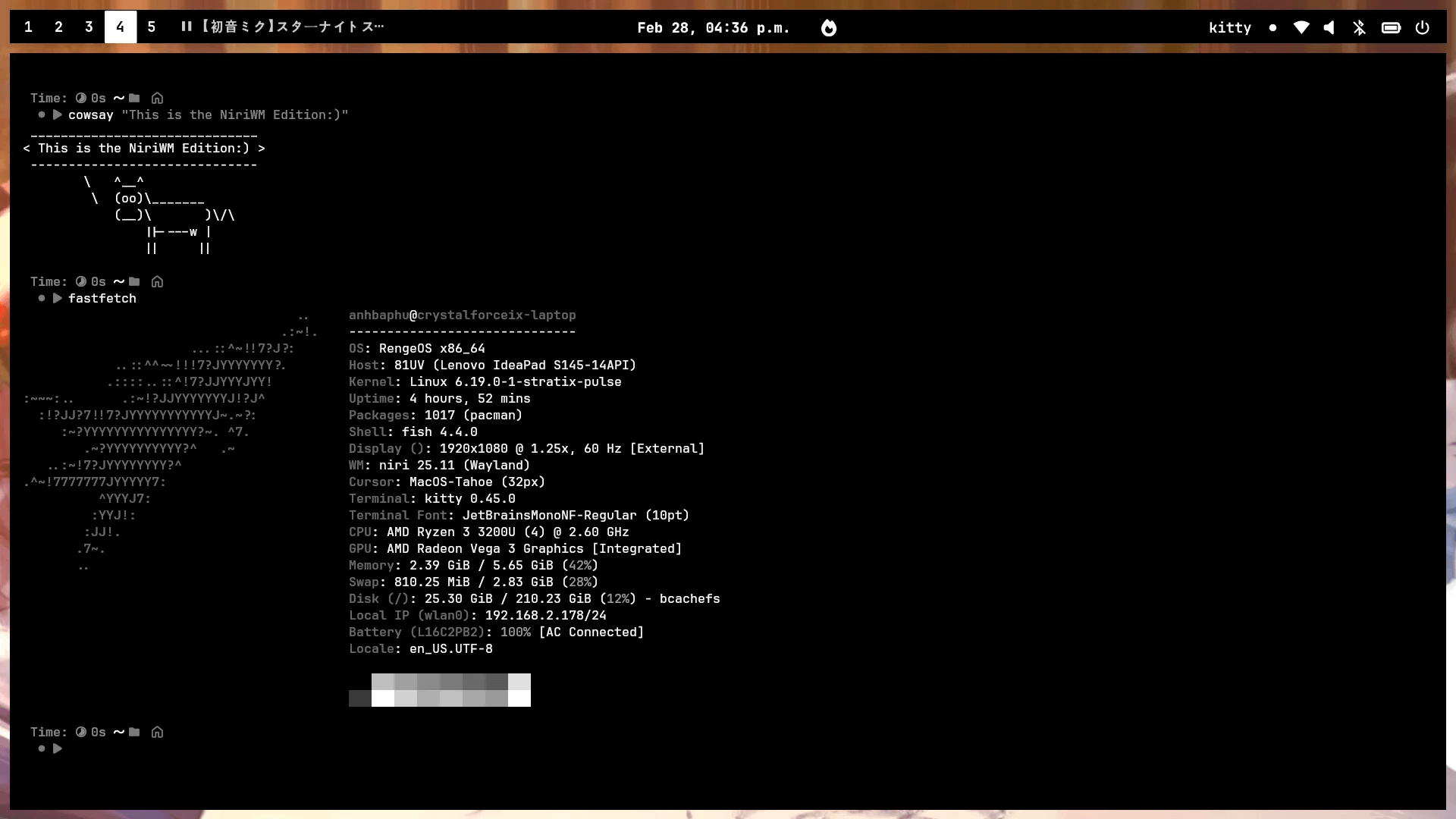
| Working state: | Active |
| Desktop: | niri |
| Init Software: | systemd |
| Package Management: | Pacman |
| Release Model: | Rolling |
| Platforms: | x86_64 |
| Home Page: | rengeos.github.io/rengeos-docs |
| Developer: | RengeOS |
| This article is part of our Big List of Active Linux Distributions. |
What's a Linux distribution ("distro")? |
| A distro provides the user with a desktop environment, preloaded applications, and ways to update and maintain the system. Each distro makes different choices, deciding which open source projects to install and provides custom written programs. They can have different philosophies. Some distros are intended for desktop computers, some for servers without a graphical interface, and others for special uses. Because Linux is an open source operating system, combinations of software vary between Linux distros. |