

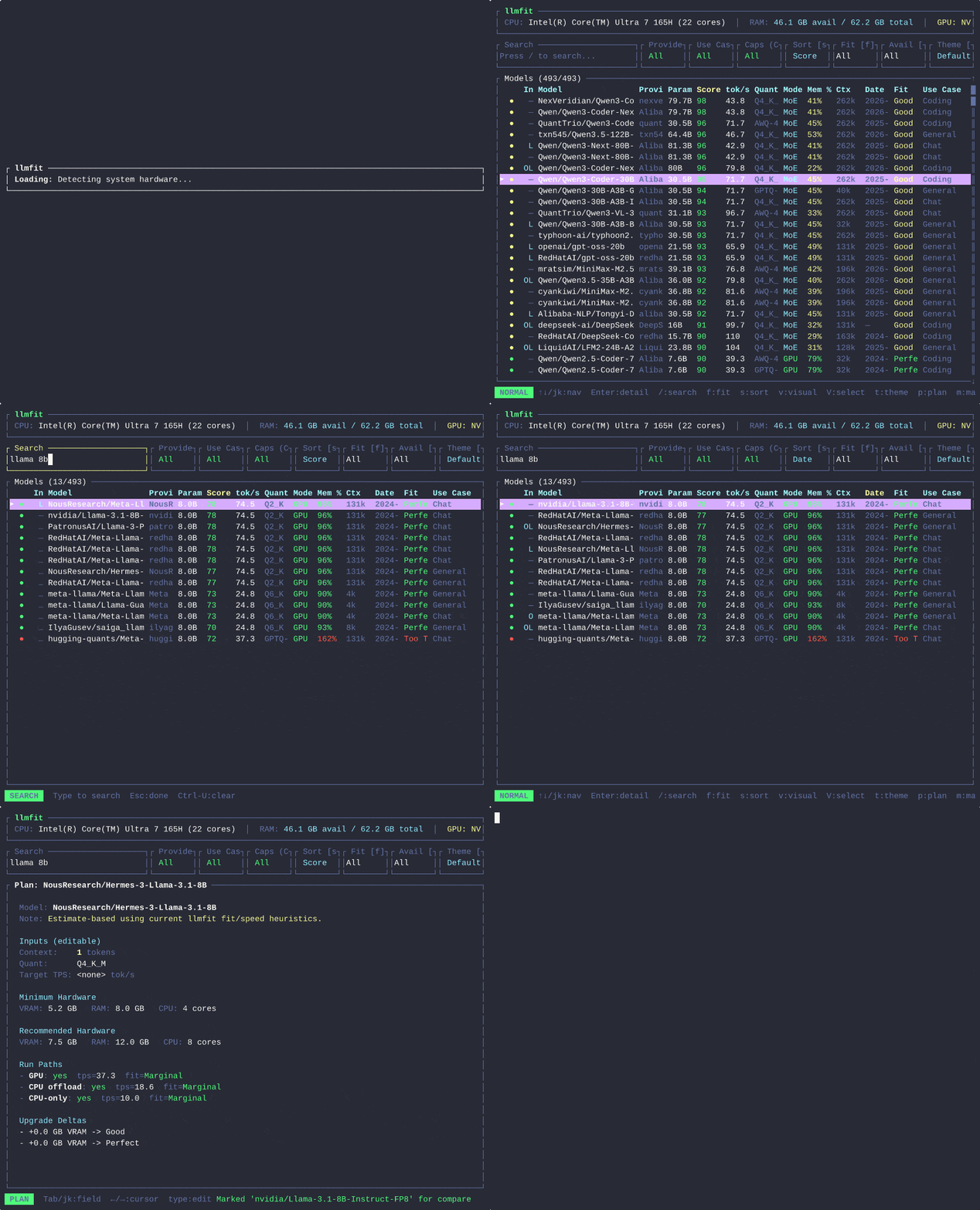
llmfit is a terminal application that helps users find local large language models that are suitable for the hardware they already own.
It detects system resources such as RAM, CPU, and GPU capabilities, estimates whether specific models will run well, ranks them across factors including quality, speed, fit, and context, and presents recommendations through either an interactive terminal interface or a classic command line mode. It also integrates with several local model runtimes so users can see installed models and download compatible ones from supported providers.
This is free and open source software.
Key Features
- Automatically detects available RAM, CPU cores, GPUs, and acceleration backends to estimate model compatibility.
- Uses dynamic quantization selection to choose the highest quality quantization level that fits the available hardware.
- Supports multi-GPU setups and includes handling for a range of hardware and backend configurations.
- Includes advanced terminal workflow features such as search, filtering, compare views, and a hardware planning mode.
- Integrates with Ollama, llama.cpp, MLX, Docker Model Runner, and LM Studio for local runtime support.
- Offers JSON output for scripting, automation, and agent-driven workflows.
Website: github.com/AlexsJones/llmfit
Support:
Developer: Alex Jones
License: MIT License
llmfit is written in Rust. Learn Rust with our recommended free books and free tutorials.
 Explore our comprehensive directory of recommended free and open source software. Our carefully curated collection spans every major software category. Explore our comprehensive directory of recommended free and open source software. Our carefully curated collection spans every major software category.This directory is part of our ongoing series of informative articles for Linux enthusiasts. It features hundreds of detailed reviews, along with open source alternatives to proprietary solutions from major corporations such as Google, Microsoft, Apple, Adobe, IBM, Cisco, Oracle, and Autodesk. You’ll also find interesting projects to try, hardware coverage, free programming books and tutorials, and much more. Discovered a useful open source Linux program that we haven’t covered yet? Let us know by completing this form. |