I’ll see how the Orange Pi R2S compares to a few other single board computers and mini PCs which cost considerably more.
Read more
The Linux Portal Site
I’ll see how the Orange Pi R2S compares to a few other single board computers and mini PCs which cost considerably more.
Read more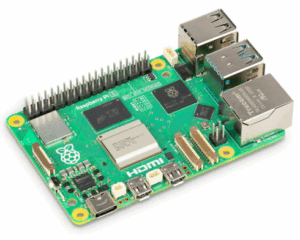
A question I get asked a fair bit is whether the Raspberry Pi 5 represents good value to purchase as a desktop PC.
Read more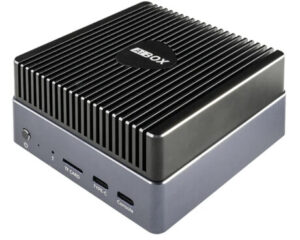
This is the first in a series of articles looking at the Firefly AIBOX 3588S embedded fanless ARM-based mini PC.
Read more
FBX Review is a lightweight, standalone software tool for viewing 3D assets and baked animations quickly and efficiently.
Read more
In this article I document transferring my Ubuntu distribution from the microSD card to the eMMC. It makes the distro much snappier on the RV2.
Read more
Autodesk Fusion is a CAD, CAM, and PCB design software. We recommend the best free and open source alternatives.
Read more
Let’s try to improve the Raspberry Pi 5’s Wi-Fi performance (transfer speed and latency) with a USB 3.0 adapter from BrosTrend.
Read more
Options for installing software are a bit more limited with the RV2 compared with ARM-based single board computers. Let’s build a piece of open source software.
Read more
Autodesk Motion FX is software to create real-time video effects using your computer’s camera. It’s also a video editor.
Read more
For this review, I’ve evaluating the Kioxia Exceria Plus G2 Portable SSD. It’s available in 500GB, 1TB, and 2TB capacities. I’m reviewing the 2TB version.
Read more
In this article in the series, I look at the power consumption of the Orange Pi 5 Max and compare it to some other computers.
Read more
This is a review of the BrosTrend USB WiFi 6 Adapter. It supports Ubuntu, Linux Mint, Debian, Ubuntu Mate, and other distributions.
Read more
The Orange Pi R2S features a RISC-V processor, four wired network ports (two 2.5G ethernet ports and two 1G ethernet ports).
Read more
My RV2 board is running Ubuntu 24.04. Included is a configuration tool called orangepi-config. Let’s see what it offers.
Read more
This is a review of the Luckfox 15.6″ Portable Monitor. It’s an IPS screen with 1920×1080 resolution, 100% sRGB, and supports HDR.
Read more
In this article in the series, I look at the power consumption of the Banana Pi BPI-F3 and compare it to some other computers.
Read more
June 2025 updates to the largest compilation of recommended free and open source software available for Linux.
Read more
I’m testing the 2TB PD20 Mini External SSD which provides plenty of capacity for backing up a computer or holding a good chunk of data.
Read more
This is a series of articles looking at the Orange Pi R2S, the latest addition to the range of single board computers from Orange Pi.
Read more
In this article I explore a simple upgrade to improve the Raspberry Pi 5’s network speed.
Read more
I’ve been evaluating the Intehill 16″ 3K Touchscreen Portable Monitor U16ZT with a variety of Linux devices. Here are my findings.
Read more
In this article in the series, I look at the power consumption of the Orange Pi RV2 and compare it to some other computers.
Read more
In this article I benchmark the Banana Pi BPI-F3 and compare it to other single board computers as well as an N100 Mini PC.
Read more
I benchmark the Orange Pi 5 Ultra, Orange Pi 5 Max, Orange Pi RV2 against a Raspberry Pi 5 and a DreamQuest N100 Mini PC.
Read more
Readest is an open-source ebook reader designed for immersive and deep reading experiences. Built as a modern rewrite of Foliate, it leverages Next.js 15 and Tauri v2 to deliver a smooth, cross-platform experience across macOS, Windows, Linux, Android, iOS, and
Read more
Bar Assistant is made specifically for managing cocktail recipes
Read more
Writing is one of the essential skills in modern society.
Read more
Pyflakes analyzes programs and detects various errors. It works by parsing the source file, not importing it
Read more
The main function of a web server is to display website content through storing, processing and delivering webpages to users. Here’s our verdict on the best free and open source web servers.
Read more
This article spotlights alternative tools to cp, a tool for copying files and directories.
Read more
Manuals indexes your developer manuals and provides robust browsing and searching capabilities.
Read more
Spider is software that lets you install and integrate web apps into the GNOME desktop. It’s written in Rust.
Read more
Escambo is an HTTP-based APIs test application made in GTK4/Libadwaita.
Read more
cgmnlm is a colorful Gemini line mode client which includes a CLI utility (gmni) and a line-mode browser (cgmnlm).
Read more